
Your Skin Barrier: Why It Matters More Than Your 10-Step Routine
The beauty industry celebrates “more”: more steps, more active ingredients, & more products. But your skin doesn’t need complexity. It needs stability.
At the center of skin health lies one unsung hero: the skin barrier. Understanding it (and how to protect it) can do more for your complexion than any 10-step routine.
What Is the Skin Barrier?
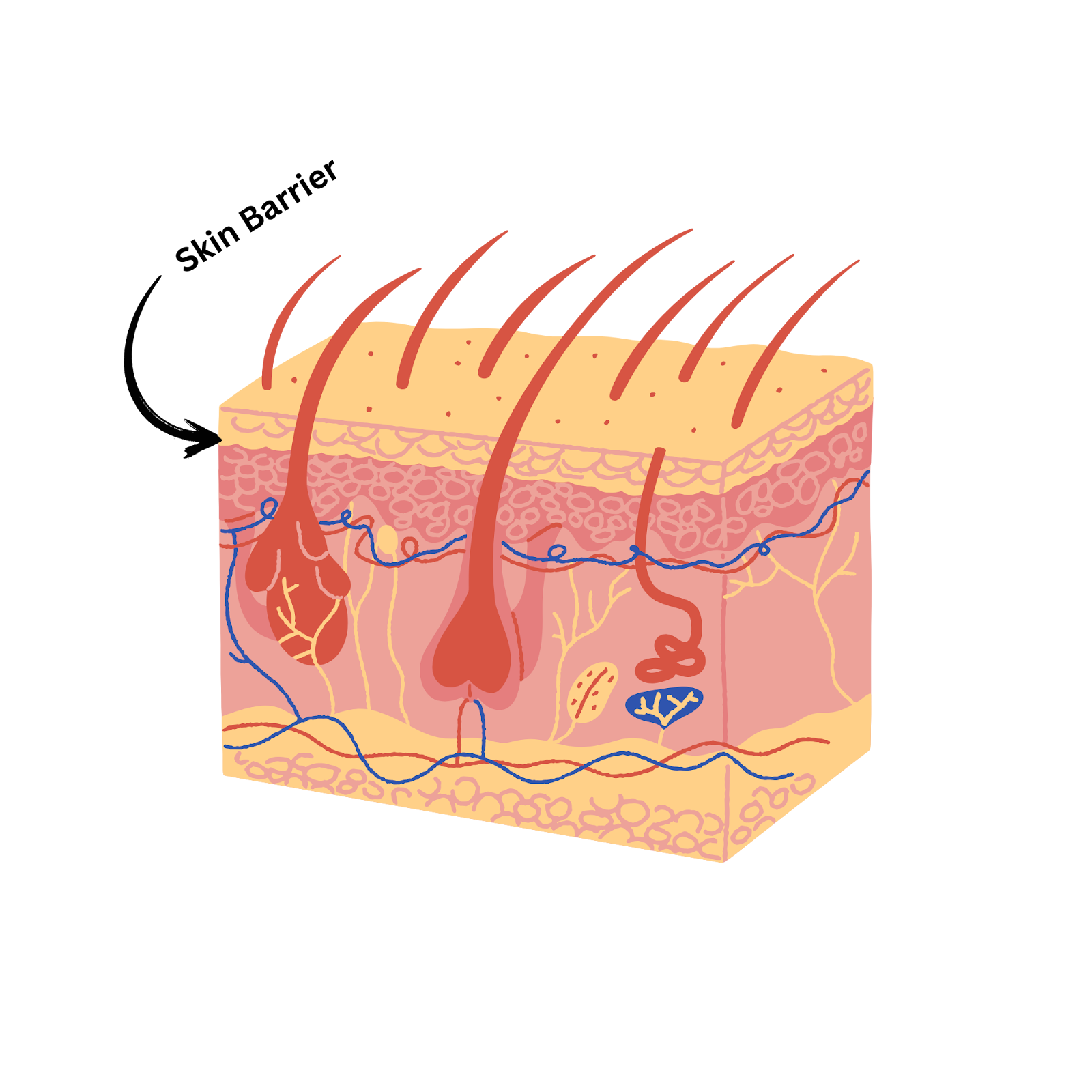
Your skin barrier refers to the stratum corneum, the outermost layer of your skin. It acts like a brick wall:
The bricks are your corneocytes (flattened, dead skin cells).
The mortar is the lipid (fatty) matrix (ceramides, cholesterol, and fatty acids).
Together, these form a semi-permeable shield that keeps moisture in and irritants out (source).
This barrier maintains hydration, regulates pH, and protects you from pollution, bacteria, and UV damage. When it’s functioning well, your skin looks smooth, balanced, and resilient.
What Damages the Barrier?
The skin barrier is remarkably resilient, but not invincible. Common stressures include:
Over-cleansing: Stripping surfactants remove vital lipids.
Over-exfoliation: Used too frequently, exfoliants can erode the outer layer.
Environmental stress: UV radiation, pollution, and cold weather increase oxidative damage.
Lifestyle stress: Poor sleep and chronic stress elevate cortisol, which impairs healing.
Even “good” skincare habits can backfire when overdone (study)(study).
Signs of a Compromised Barrier
If your skin feels tight, flaky, or reactive, your barrier might be sending a signal. Other signs include:
Sudden sensitivity or stinging with familiar products
Rough texture or dullness
Increased breakouts or redness, including red spots or flakes
Makeup patchiness due to dehydration
Barrier repair starts with recognizing these signs early, before inflammation becomes chronic.
How to Support and Rebuild It
1. Simplify Your Routine
More isn’t better. Limit active ingredients to one or two at a time. For example, Vitamin C in the morning and a retinol product at night. Focus on gentle cleansing, hydration, and consistent sun protection.
2. Use Barrier-Supportive Ingredients
Look for:
Ceramides to restore the lipid matrix
Niacinamide to strengthen barrier proteins
Fatty acids and squalane to replenish moisture
Humectants like glycerin and hyaluronic acid attract and hold in water.
These ingredients improve structure and hydration w/out overloading the skin. (study)
3. Avoid Fragrance and Alcohol-Based Products
Fragrance and denatured alcohol are common irritants for compromised skin. If sensitivity is an issue, go fragrance-free while your barrier recovers. You can opt for essential oils that are gentle on the skin but add appealing scents. (study)
4. Protect Daily
UV damage is one of the fastest ways to weaken your barrier. A daily mineral sunscreen with zinc oxide defends against both UVA and UVB rays while staying gentle on sensitive skin. (study)
5. Prioritize Rest and Nutrition
Your barrier regenerates while you sleep. A balanced diet rich in antioxidants, healthy fats, and hydration supports its natural repair process from the inside out. (study)

Suhu’s Take
Every time you apply a product, you alter your skin’s microenvironment. Studies show that simplified routines with fewer, well-formulated products maintain the skin’s natural pH and microbial diversity more effectively than intense multi-step regimens (study).
Put simply: your skin barrier thrives on consistency, not constant experimentation. We design skincare that supports, not stresses, the barrier. Our philosophy is rooted in balance: science-backed active ingredients, ethical sourcing, and minimalist formulations that let your skin do what it’s meant to do – protect and renew itself.
From our Vitamin C Serum to our Rosehip Body Oil, every Suhu product is crafted to complement the skin’s natural rhythm without overwhelming it.
Because skincare shouldn’t feel like a full-time job. It should feel like care.
