
Decoding Ingredient Labels: How to Read Skincare Like a Scientist
Skincare labels can feel like a foreign language: long chemical names, Latin plant species, and marketing buzzwords squeezed onto a tiny box. But once you understand how to read them, those labels reveal everything you need to know about what you’re putting on your skin.
At Suhu, we believe transparency is non-negotiable. Knowing what’s inside your skincare is not about fear, it’s about clarity, confidence, and informed choice.
Start With the INCI Name
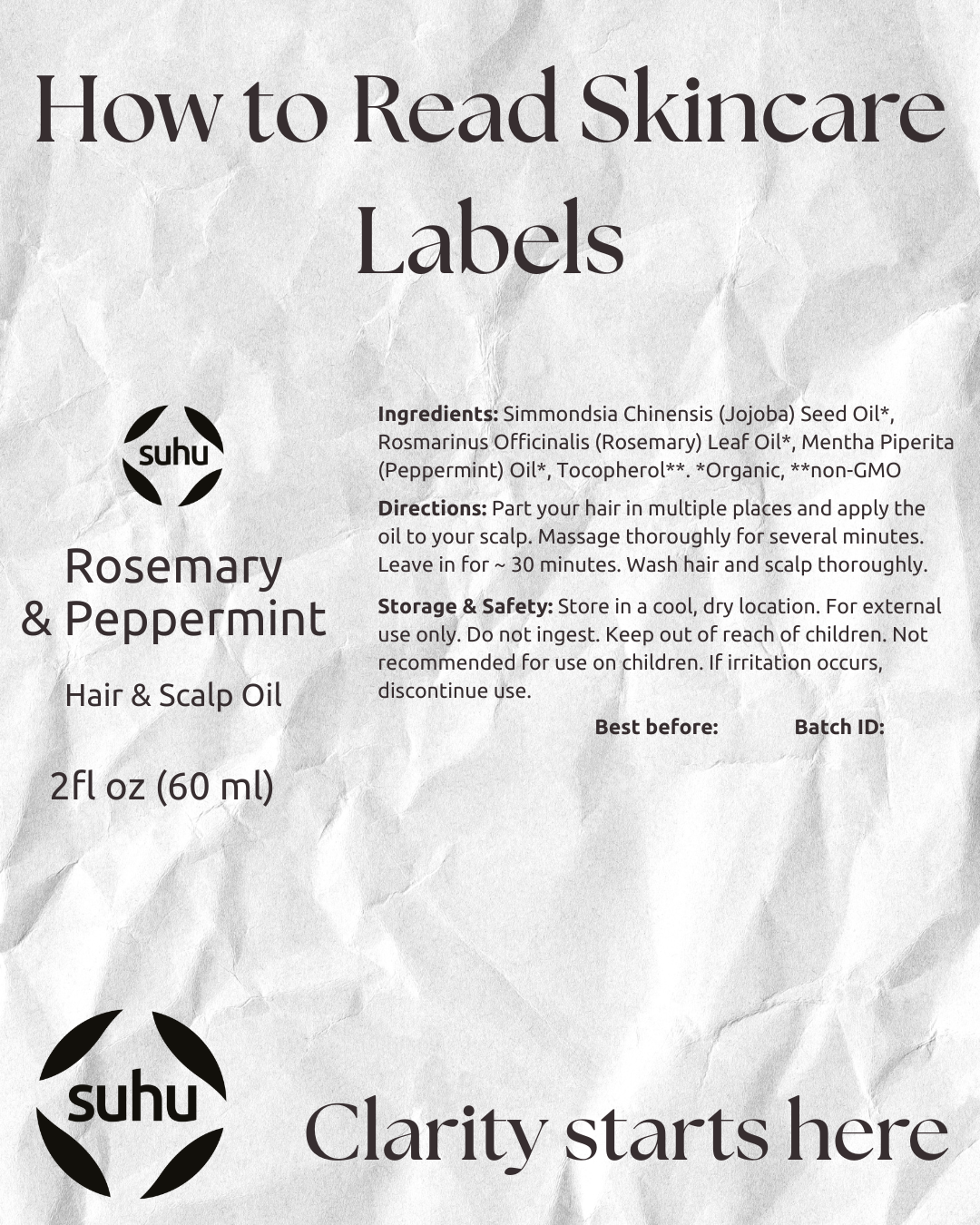
Every cosmetic product lists ingredients using their INCI (International Nomenclature of Cosmetic Ingredients) names. These are standardized globally to ensure consistency, even if they sound intimidating.
For example:
“Rosehip oil” appears as Rosa Canina (Rosehip) Seed Oil.
“Vitamin E” is listed as Tocopherol.
“Jojoba oil” shows up as Simmondsia Chinensis Seed OIl.
INCI names might seem complex, but they protect consumers by keeping labeling consistent worldwide (source). When you see an unfamiliar term, a quick search of the INCI name (rather than the marketing name) tells you exactly what you’re dealing with.

Understand Ingredient Order and Concentration
Ingredients are listed in descending order by weight, from highest to lowest concentration (source). This means the first few ingredients make up most of the formula.
However, after about 1% concentration, ingredients can appear in any order. So if a product lists “active ingredients” like vitamin C or botanical extracts near the bottom, it may only contain trace amounts.
Pro tip: When evaluating products, focus on the top half of the ingredient list. That’s where the core formulation lies. Everything after that is likely for texture, scent, or preservation.
Know the Difference Between Actives and Carriers
Every product is made of active ingredients (the components that provide measurable benefits) and carriers or bases (the ingredients that deliver them to the skin safely and effectively).
For instance:
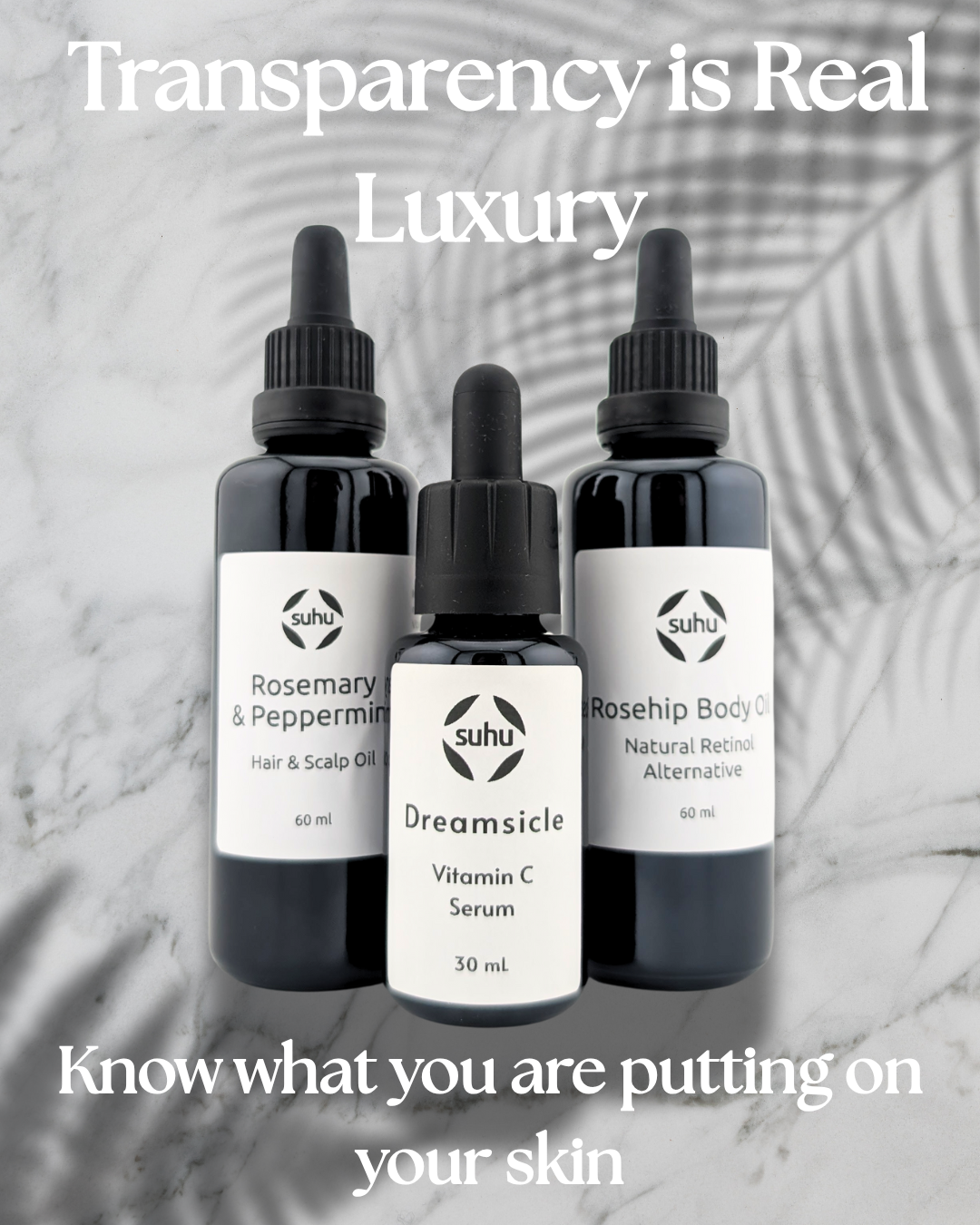
In Suhu’s Vitamin C Serum, tetrahexyldecyl ascorbate is the active (the form of vitamin C that brightens and protects) while jojoba wax and vitamin E act as nourishing carriers that enhance absorption and stability.
In our Rosehip Body Oil, the rosehip seed oil is both active and carrier, rich in natural antioxidants that condition the skin directly.
Understanding this balance helps consumers look beyond marketing claims and identify what actually drives results.
Watch for Fragrance and Preservatives
Fragrance can appear under multiple names, including Parfum or Aroma. While natural essential oils contribute pleasant scents and potential therapeutic effects, synthetic fragrance blends are among the most common causes of sensitivity (study).
Preservatives, on the other hand, are essential for product safety. Compounds like Phenoxyethanol or Sodium Benzoate prevent bacterial growth and extend shelf life. The key is balance, effective preservation without additives.
At Suhu, we keep fragrance optional and minimal, using organic essential oils for scent when included, and omitting synthetic fragrance entirely.
Learn the Red Flags and the Green Lights
Some ingredients are red flags for sensitive skin, while others signal thoughtful formulation.
Common red flags:
High concentrations of alcohol denat. (can dry or irritate skin)
Harsh surfactants like Sodium Lauryl Sulfate (SLS)
Artificial dyes or “fragrance blends” with undisclosed composition
Green-light ingredients:
Antioxidants (vitamins C & E, botanical extracts)
Plant oils high in essential fatty acids (rosehip, jojoba, sunflower)
Humectants like Glycerin and Hyaluronic Acid
These support barrier function and hydration without irritation.
Transparency is the New Luxury
In modern skincare, transparency is a sign of integrity. Brands that clearly explain ingredient origins, concentrations, and purposes empower consumers and build trust.
That’s why Suhu lists every ingredient in plain language. Discloses natural sourcing, and offers fragrance-free options for sensitive users. Because real skincare knowledge should belong to everyone.
Bottom Line
Once you learn how to read labels, you can cut through marketing noise and choose products based on evidence, not hype.
Understanding ingredient order, recognizing actives, and knowing what certain names mean helps you become your own skincare expert, one label at a time.
We believe knowledge is the foundation of conscious care. Transparency is not just a part of our brand, it’s our promise.
