
Winter is often when people become most diligent about skincare. We moisturize more, layer products, and try to protect against dryness. And yet, for many, winter is also when skin becomes more irritated, dull, or unpredictable.
This is not because people are doing nothing. It is because winter changes the conditions your skin is operating under, and many routines are not designed to adapt.
Winter Changes the Skin’s Environment
Your skin functions as a barrier between your body and the outside world. That barrier is highly responsive to environmental conditions. In winter, several things happen at once.
Cold outdoor air holds less moisture than warm air. Indoor heating further reduces humidity, often dropping it below 30 percent, well under the level skin needs to maintain hydration (study). As a result, water loss from the skin increases.
This process is known as transepidermal water loss. When it rises, skin becomes drier, tighter, and more prone to irritation (study).
The Skin Barrier Becomes More Vulnerable
The outermost layer of skin relies on lipids, including ceramides, cholesterol, and fatty acids, to stay intact. Cold temperatures and low humidity disrupt this lipid structure (study).
When the barrier weakens, skin becomes less efficient at holding moisture and more reactive to products that previously felt fine. This is why a cleanser or active ingredient you tolerated in summer can suddenly feel irritating in winter.
Dryness is not just a lack of water, it is a sign that your skin barrier could be functioning better.
Overcorrecting Often Makes Things Worse
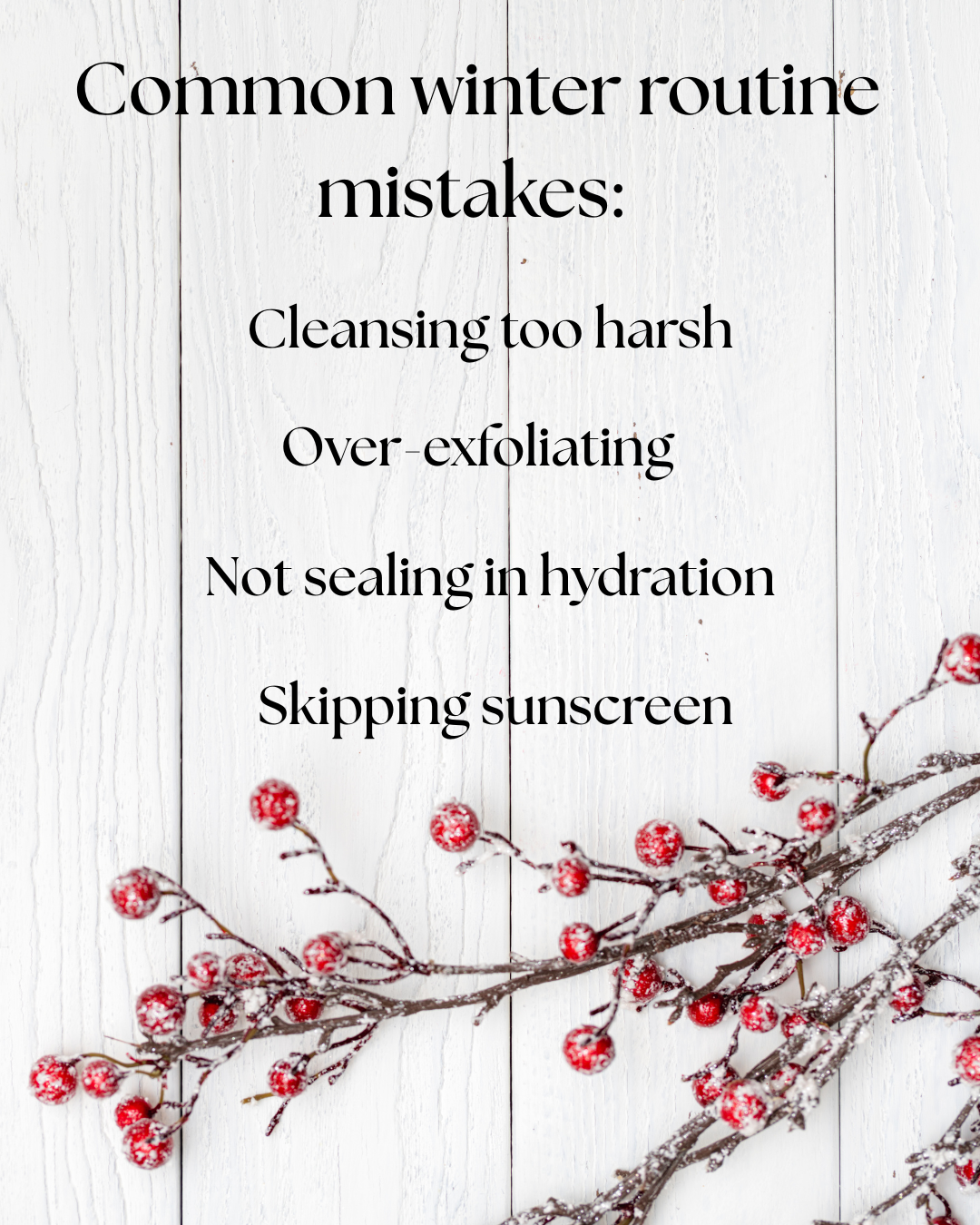
A common response to winter dryness is to add more products or stronger treatments. This can backfire.
Exfoliants, retinoids, and acids increase cell turnover, which can be helpful in some contexts. But in winter, when the barrier is already stressed, they can further increase water loss and inflammation (review).
Many routines quietly fail not because they are ineffective, but because they are too aggressive for the season.
Cleansing Becomes a Hidden Problem
Cleansing is often overlooked as a source of winter skin issues. Hot showers, foaming cleansers, and frequent washing strip away natural oils that help protect the skin barrier (review).
In warmer months, the skin can sometimes compensate. In winter, it can have a much harder time.
This is why winter skin often feels tight immediately after cleansing, even before applying products.
Why Hydration Alone is Not Enough
Many people respond to winter dryness by adding more humectants like hyaluronic acid. Humectants draw water into the skin, but they rely on surrounding moisture to work properly.
In dry air, humectants can pull water from deeper layers of the skin instead of from the environment, increasing dehydration if not paired with barrier-supporting ingredients (study).
Hydration without lipid support is incomplete care.
What Actually Helps in Winter
Winter skincare works best when it prioritizes protection over correction. An ounce of prevention is worth a pound of cure!
That means:
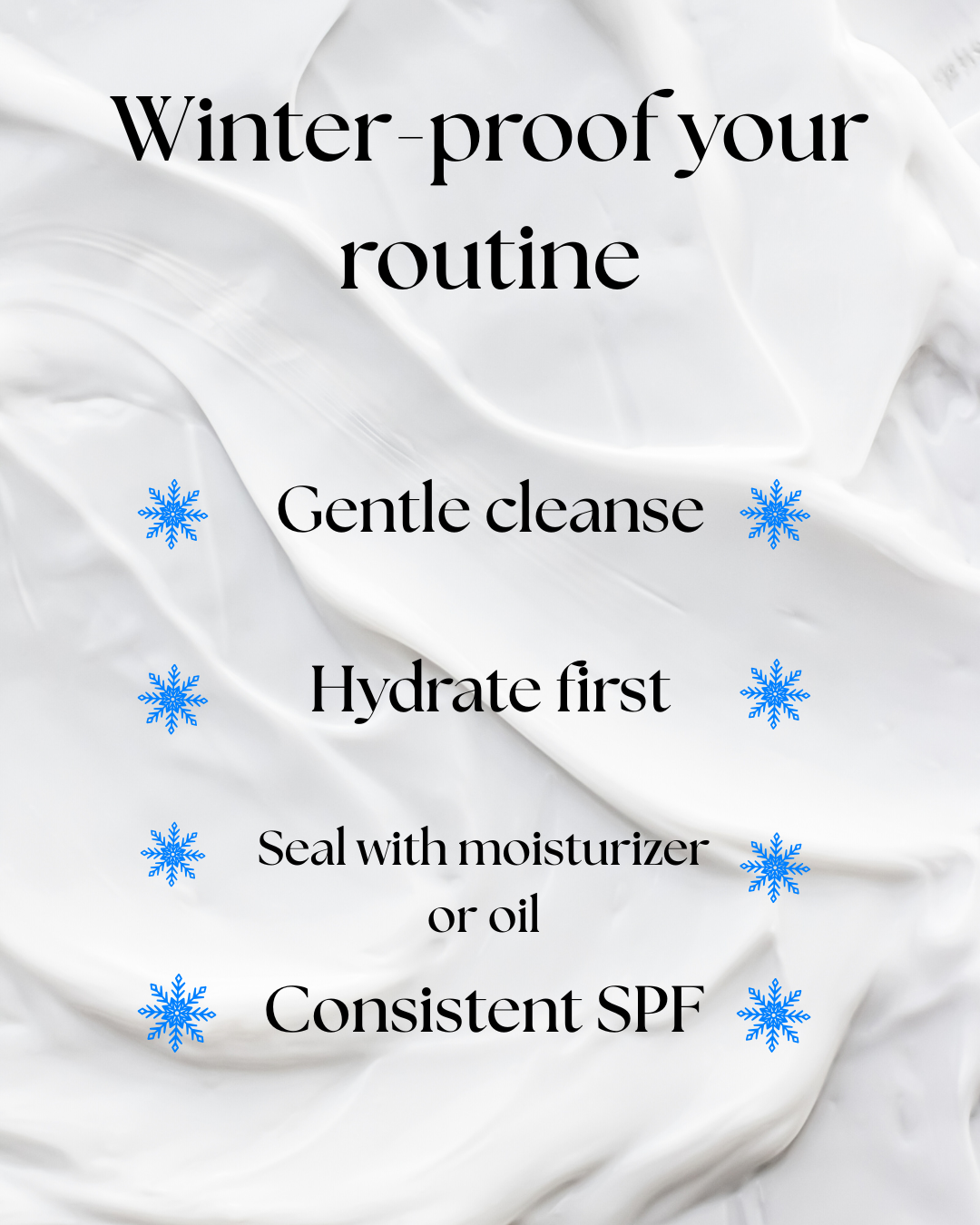
Supporting the skin barrier with oils and fatty acids
Reducing frequency of exfoliation and strong actives
Using gentler cleansers and cooler water
Sealing in moisture rather than chasing hydration alone
Plant oils rich in essential fatty acids, such as rosehip or jojoba, can help reinforce the lipid barrier and reduce water loss when used consistently (review).
Adapting Your Routine
Winter does not require us to build completely new routines from the ground up. It just takes a little adjusting.
Most skincare routines falter in winter because they do not change with the seasons. Skin is dynamic. When the environment shifts, care should shift with it.
The goal is healthy skin that is resilient throughout the year.
Bottom Line
Winter stresses the skin barrier through low humidity, cold temperatures, and indoor heating. Many routines fail because they focus on adding more products rather than supporting the skin’s changing needs.
When skincare adapts to the season, skin does not just survive winter. It thrives.
