
The skin barrier is one of the most talked-about concepts in skincare, and one of the least understood. Many people only become aware of it when something feels wrong. Sudden dryness, stinging, redness, or sensitivity often points to a barrier that is no longer functioning as it should.
Understanding what the skin barrier actually does helps explain why these changes feel so immediate and uncomfortable, and why repairing the barrier is often the most effective first step in skincare.
What the Skin Barrier Is
The skin barrier refers primarily to the outermost layer of the skin, known as the stratum corneum. It is made up of skin cells held together by a matrix of lipids, including ceramides, cholesterol, and fatty acids.
This structure is often compared to bricks and mortar. The skin cells act as the bricks, while the lipids act as the mortar that holds everything together (review). When this structure is intact, the barrier functions efficiently. When it is disrupted, problems begin.
What a Healthy Skin Barrier Does
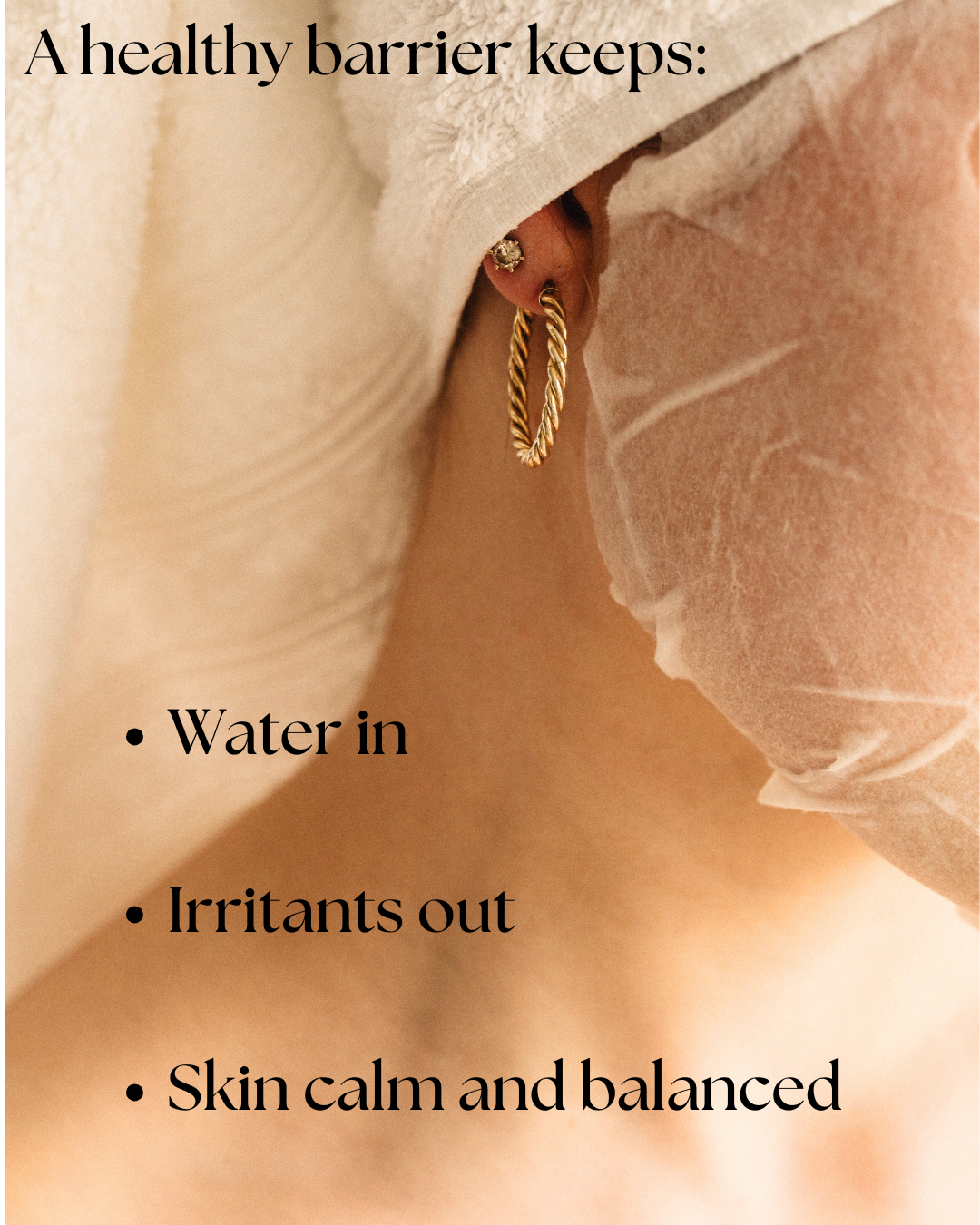
A healthy skin barrier performs several essential roles at once.
First, it prevents excessive water loss. THe barrier slows transepidermal water loss, helping skin remain hydrated and flexible (review).
Second, it protects against external stressors. Pollution, allergens, bacteria, and irritants are less able to penetrate intact skin (review).
Third, it regulates inflammation. An intact barrier reduces the immune system’s need to respond defensively, keeping redness and sensitivity in check (review).
These functions work together. When one fails, the others often follow.
Why You Feel It When the Barrier Breaks
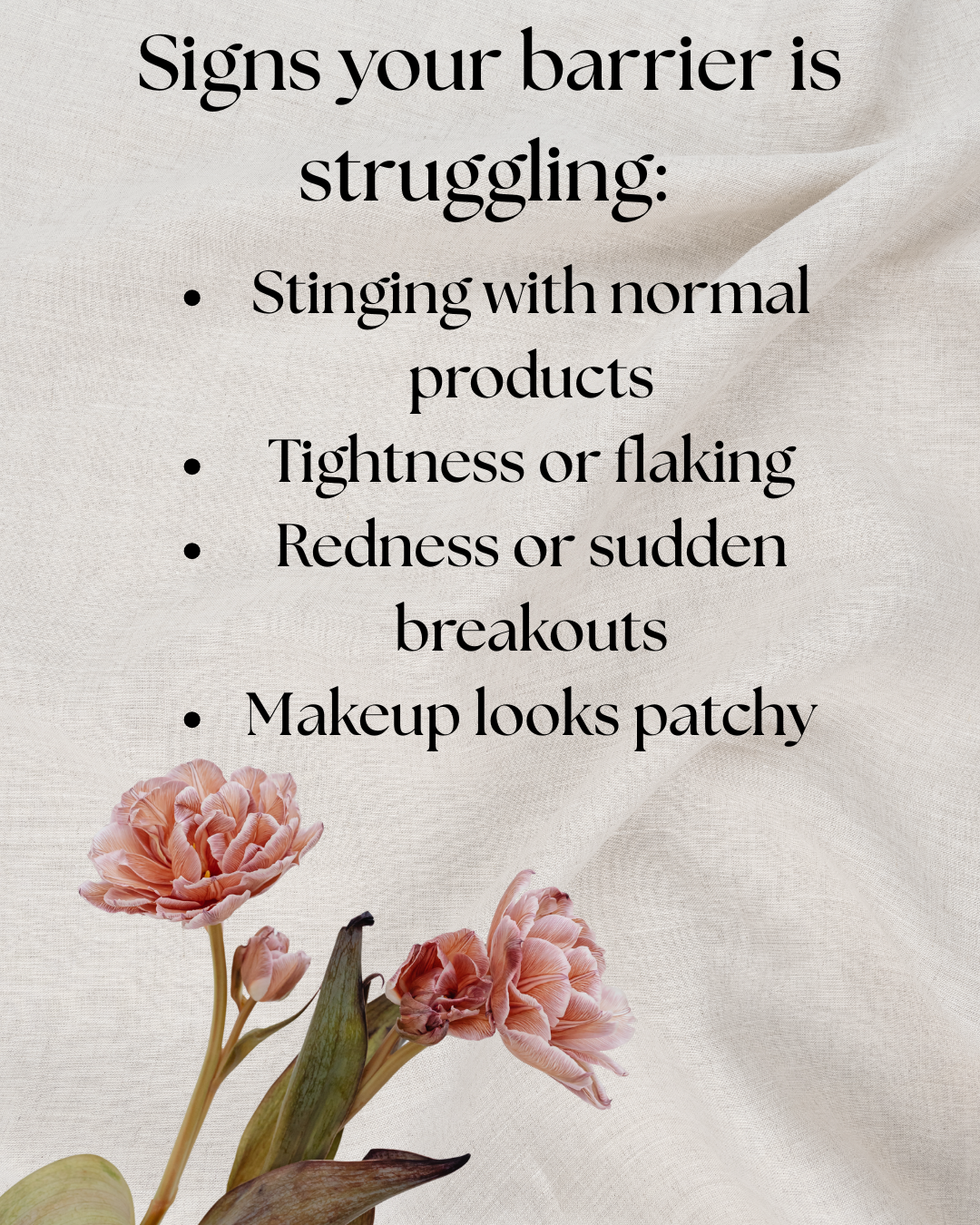
Barrier damage is not subtle. Because the skin is densely innervated and closely connected to the immune system, disruptions are felt quickly.
When the lipid matrix is compromised, water escapes more easily. Nerve endings become more exposed, leading to sensations of tightness, burning, or stinging (study).
At the same time, irritants and microbes penetrate more easily, triggering inflammation. This is why compromised skin often feels both dry and reactive.
The discomfort is not imagined. It is a direct physiological response to barrier failure.
Common Ways the Skin Barrier Gets Damaged
Barrier disruption often comes from cumulative habits rather than a single mistake.
Frequent cleansing with harsh surfactants removes protective lipids (review). Overuse of exfoliants and strong actives increases cell turnover faster than the barrier can rebuild itself (review). Environmental stressors like cold air, low humidity, and indoor heating further weaken lipid organization (study).
Even well-intentioned skincare routines can cause damage if they do not account for the skin’s limits.
Why More Hydration Isn’t Always the Answer
When skin feels dry, the instinct is to add more water. While hydration is important, it does not solve barrier damage on its own.
Humectants draw water into the skin, but without sufficient lipids to seal it in, that water evaporates quickly. In dry environments, this can worsen dehydration rather than relieve it (study).
Barrier repair requires replenishing lipids, not just adding moisture.
How the Skin Barrier Repairs Itself
The skin is resilient. Given the right conditions, it can repair its barrier naturally.
This process relies on adequate lipids availability, reduced irritation, and time. Ingredients that support this process include ceramides, cholesterol, fatty acids, and plant oils rich in similar lipids (review).
Gentle cleansing, simplified routines, and consistent nourishment allow the barrier to rebuild and regain balance.

Why Barrier Health Feels Like Relief
When the skin barrier recovers, the change is noticeable. Tightness eases. Redness fades. Products stop stinging. Skin feels calmer and more predictable.
This relief happens because the skin is no longer operating in defense mode. A healthy barrier restores comfort before it restores appearance.
Bottom Line
The skin barrier is not an abstract concept. It is a functional system that controls hydration, protection, and comfort.
When it is healthy, you rarely notice it. When it breaks, you feel it immediately.
You don’t need to add more products to support your skin barrier. You just need to understand what skin needs to stay resilient and give it the conditions to do its job.
