
Lotion vs Oil: What They Actually Do and When You Need Each
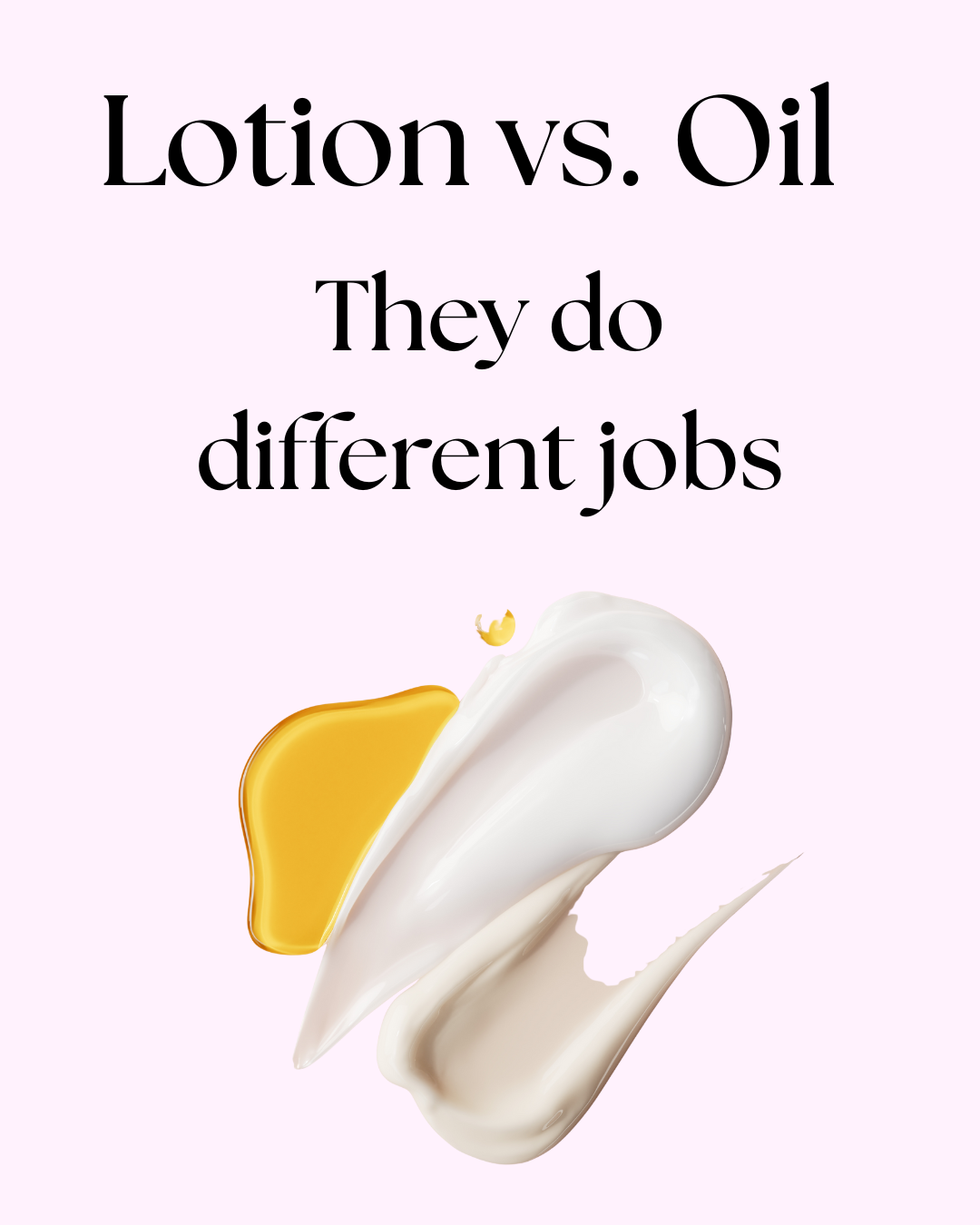
Lotions and oils are often treated as interchangeable. Both moisturize. Both soften the skin. Both promise comfort and hydration. But they work in fundamentally different ways.
Understanding what lotions and oils actually do helps explain why one can feel perfect in some situations and completely ineffective in others. It also explains why many people feel like they are moisturizing regularly but still struggle with dryness or irritation
What Skin Needs to Stay Comfortable
Healthy skin relies on two things working together.
First, it needs water within the skin cells to stay flexible and resilient.
Second, it needs a lipid barrier to prevent that water from escaping.
Most skin discomfort comes from an imbalance between these two systems. Lotion and oil address different sides of that equation.
What Lotions Actually Do
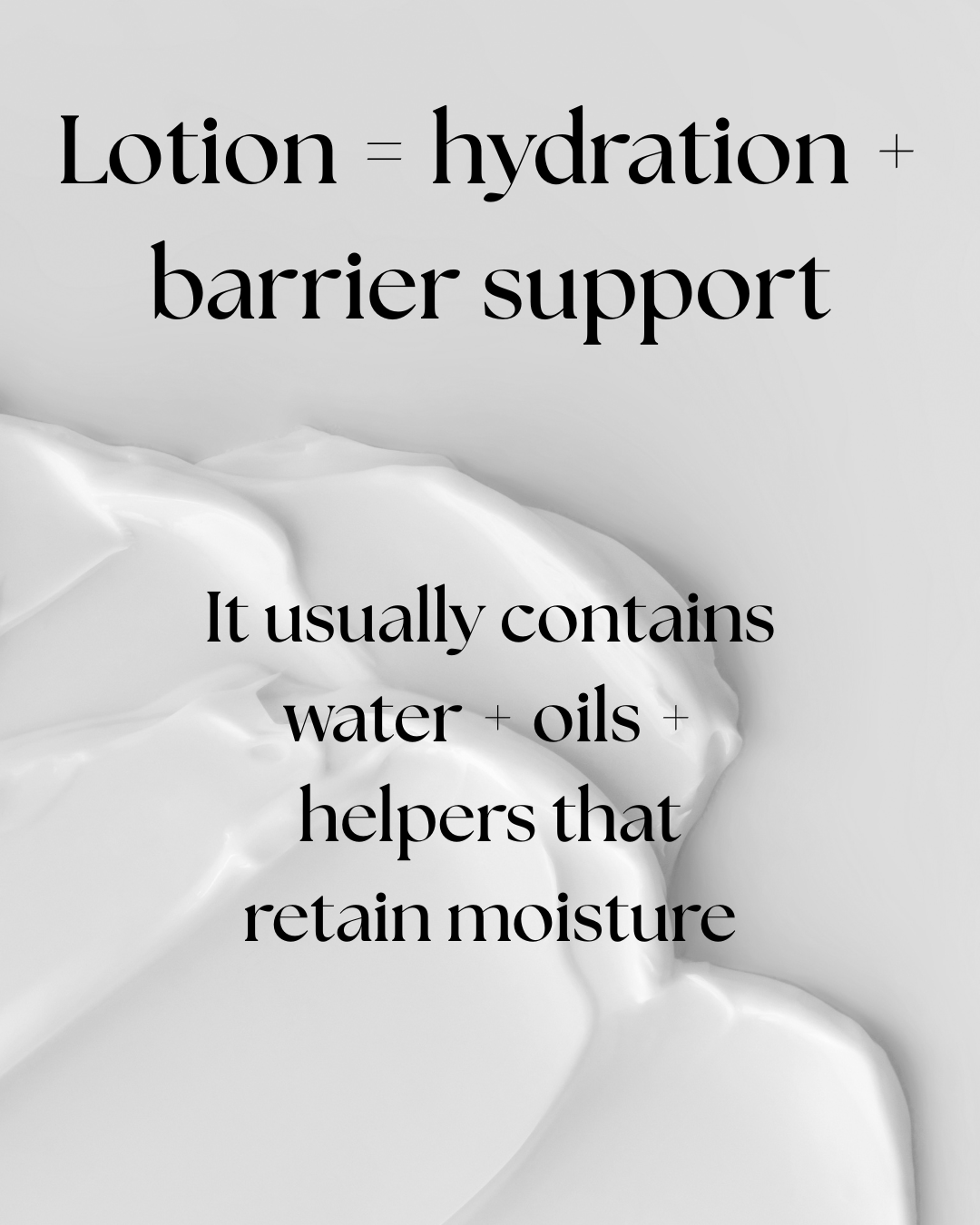
Lotions are emulsions, meaning they contain both water and oil, held together by emulsifiers. Their primary function is hydration.
Lotions typically contain humectants like glycerin or hyaluronic acid, which attract and bind water in the skin (review). This makes them especially useful when skin feels tight or dehydrated.
Because lotions contain water, they feel lighter and absorb quickly. THis is why they are often preferred during warmer months or in humid environments.
However, lotions rely on the skin’s existing barrier to hold that hydration in place. If the barrier is compromised, the water provided by a lotion can evaporate quickly, leaving skin feeling dry again soon after application (review).
What Oils Actually Do
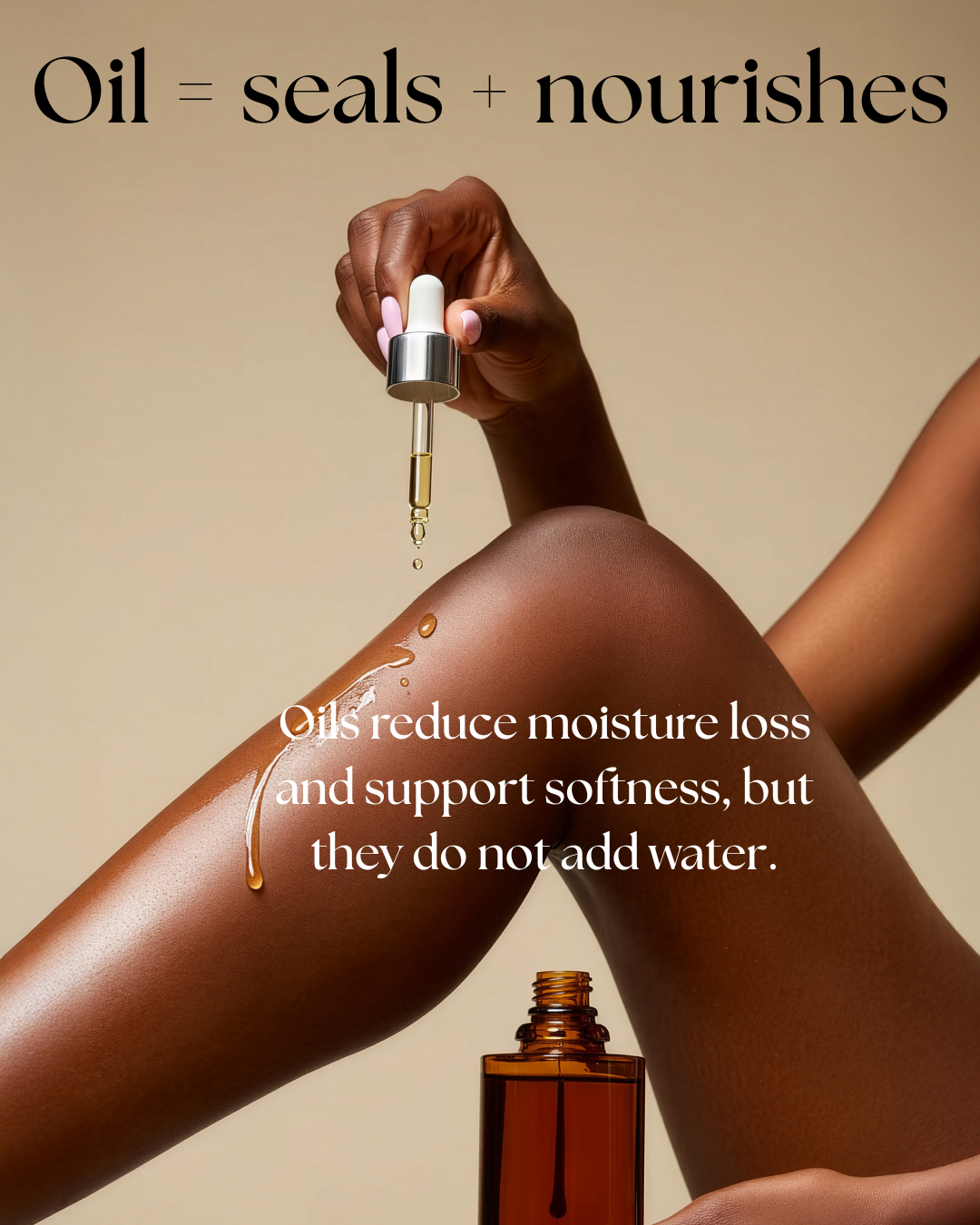
Oils do not hydrate in the same way lotions do. Oils contain little to no water.
Instead, oils work by reinforcing the skin barrier. They form a protective layer that slows transepidermal water loss and helps seal moisture into the skin (review).
Many plant oils also contain essential fatty acids and antioxidants that support barrier repair and reduce inflammation (review). Oils are particularly effective when skin feels rough, flaky, or reactive.
Because oils do not add water, they are most effective when applied to slightly damp skin or layered over a hydrating product.
Why Oils Can Feel Better in Winter
In dry environments, such as winter air or heated indoor spaces, humectants can struggle to pull moisture from the environment. In some cases, they may draw water from deeper layers of the skin instead (study).
Oils help counteract this by reducing water loss rather than trying to increase water content alone. This is why oils often feel more comforting and effective during colder months.
When Lotion Is the Better Choice
Lotions tend to work best when:
The environment has adequate humidity
Skin is dehydrated but the barrier is intact
You want fast absorption without residue
Lotions are well suited for daytime use, layering under sunscreen, or warmer climates where occlusion feels heavy.
When Oil Is the Better Choice
Oils are most helpful when:
Skin feels dry, flaky, or irritated
The barrier is compromised
You are exposed to cold, wind, or dry indoor air
Oils are particularly effective at night, after bathing, or during seasonal transitions when the skin needs extra protection.
Why Using Both Often Works Best
Lotion and oil can work to complement one another.
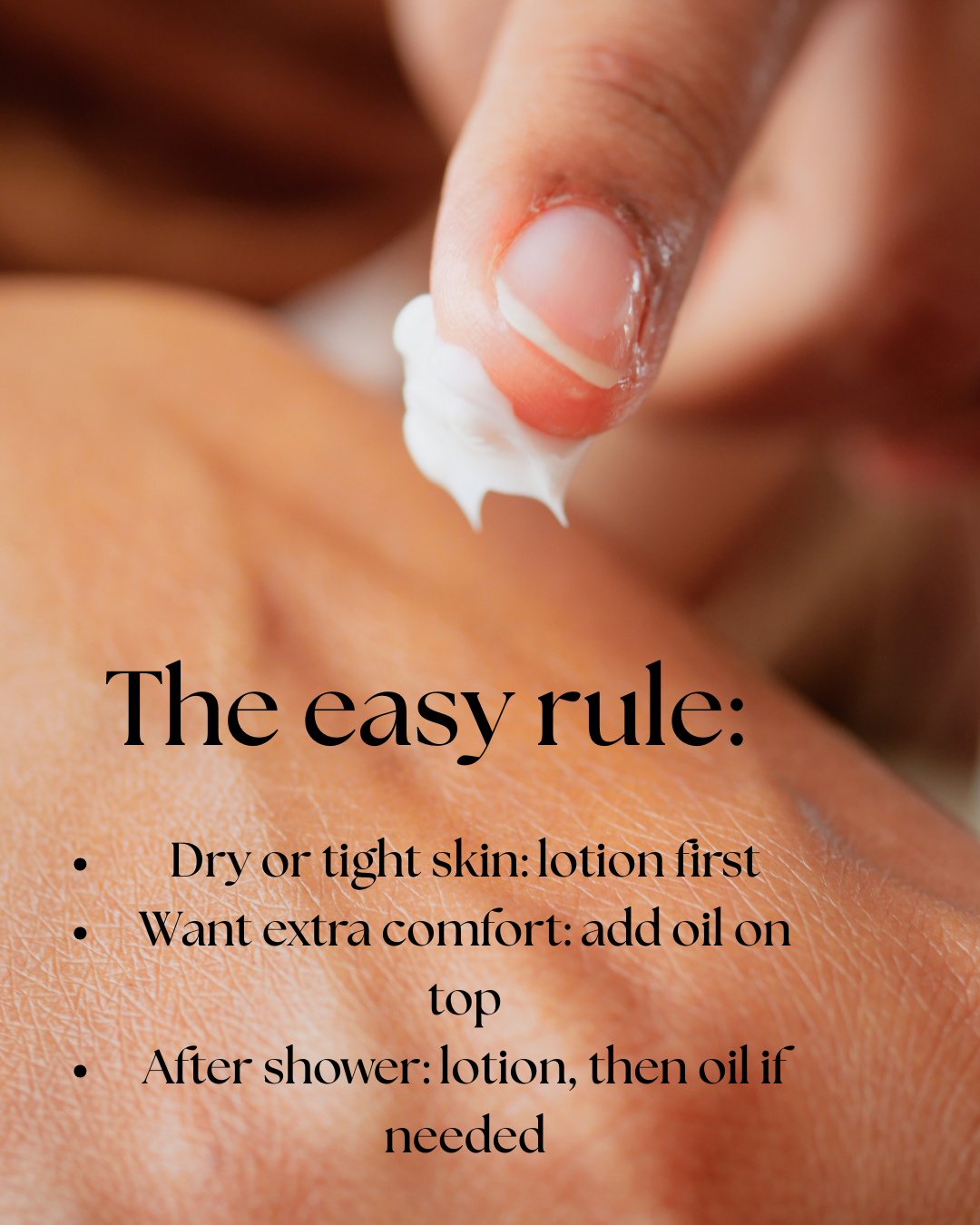
Applying lotion first provides hydration. Applying oil afterward helps seal that hydration in place. This layered approach supports both sides of skin health: water content and barrier integrity (review).
This is also why a simple routine that adapts to environment and season often works better than adding more products.
Bottom Line
Lotions add water. Oils protect it.
If skin feels tight or dull, hydration may be missing. If skin feels rough, reactive, or persistently dry, barrier support is likely the issue.
Knowing when to reach for lotion, oil, or both allows skincare to respond to what skin actually needs rather than following habits or trends.
