
Why “Hydration” Is Not the Same as “Moisture”
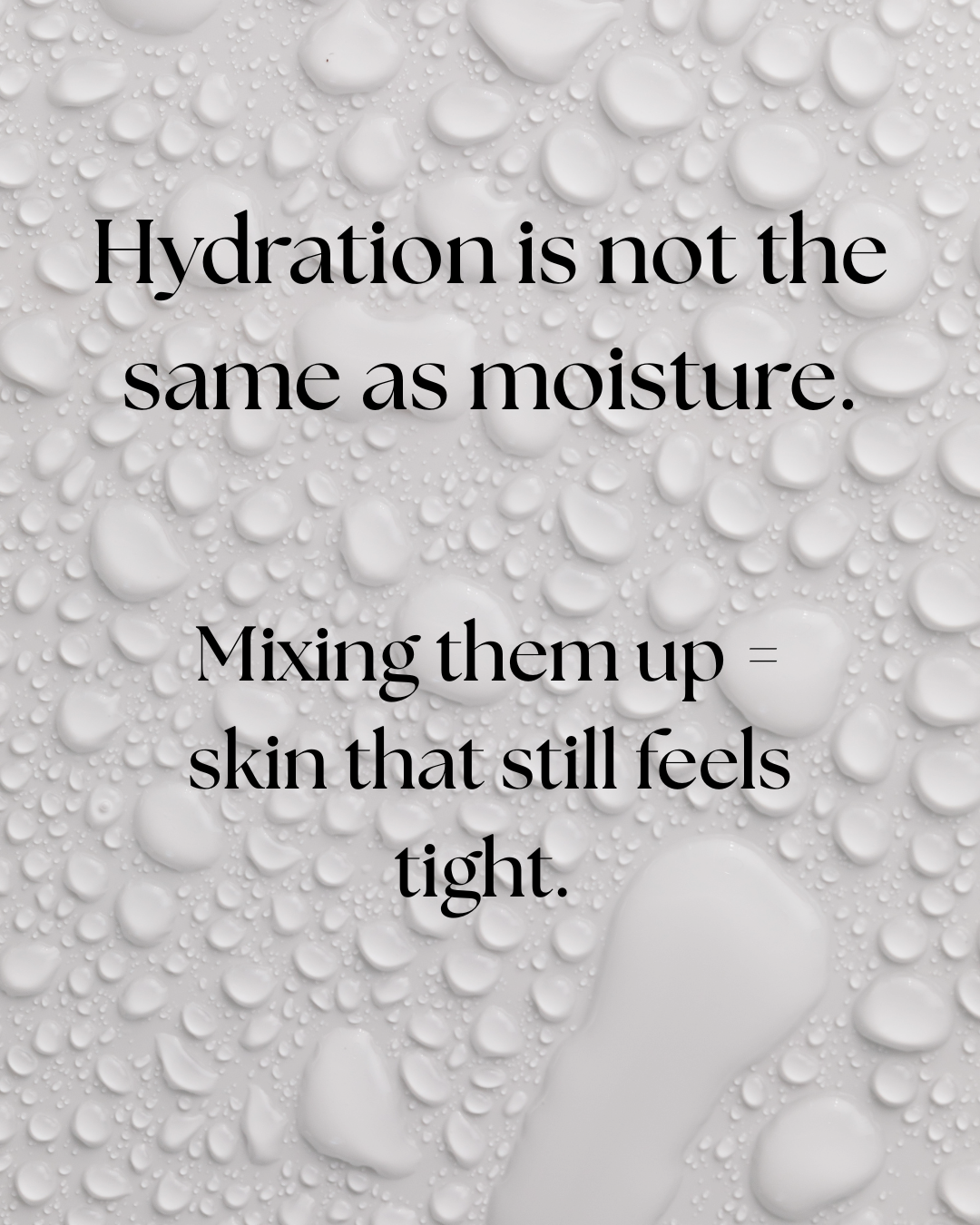
“Hydration” and “moisture” are often used interchangeably in skincare. They sound similar, and both are associated with soft, comfortable skin. But biologically, they refer to two different processes.
Confusing the two is one of the main reasons people feel like they are doing everything right and still dealing with dryness, tightness, or irritation.
Understanding the difference helps explain what your skin is actually asking for and how to respond effectively.
What Hydration Actually Means
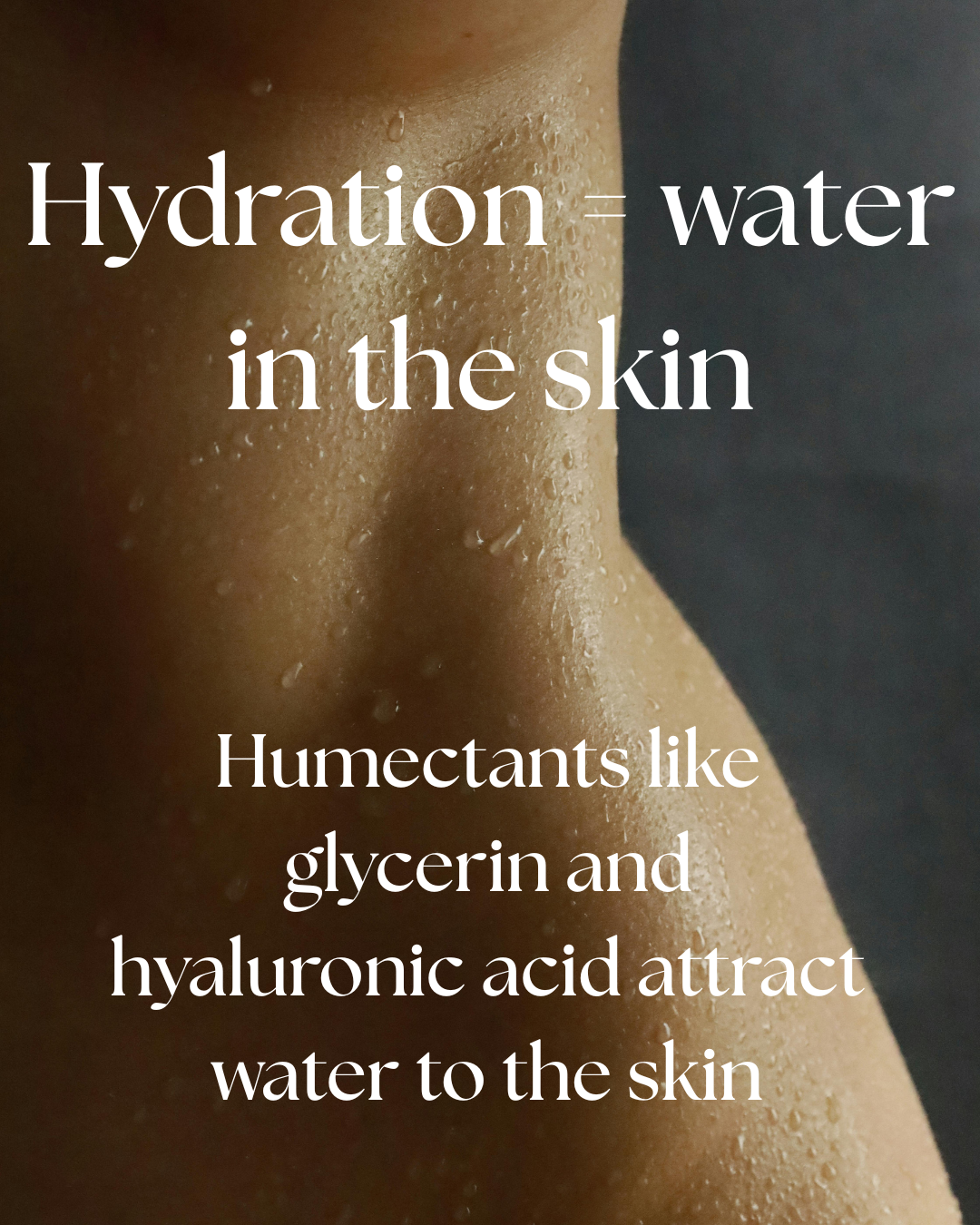
Hydration refers to water content within the skin.
When skin is hydrated, its cells contain enough water to remain plump, flexible, and resilient. Hydration supports enzymatic activity, cell turnover, and overall skin function (review).
Ingredients that hydrate the skin are typically humectants. These include glycerin, hyaluronic acid, urea, and certain sugars. Humectants attract and bind water, either from the surrounding environment or from deeper layers of the skin (review).
Hydration is what gives that immediate feeling of bounce or freshness.
What Moisture Actually Means
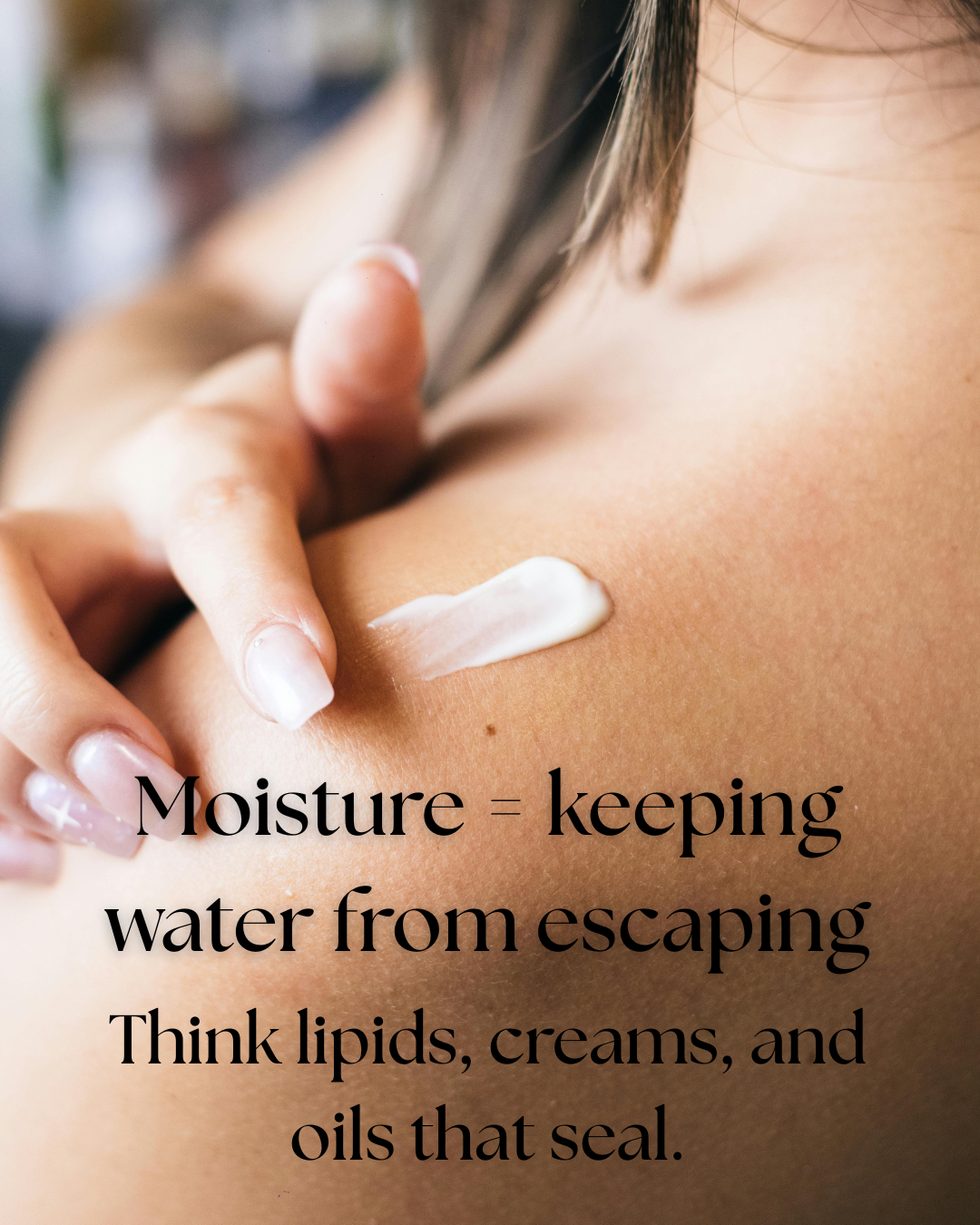
Moisture refers to the skin’s ability to retain that water over time.
This function is controlled by the skin barrier, specifically the lipid matrix made up of ceramides, cholesterol, and fatty acids. When this lipid structure is intact, water loss slows and hydration is preserved (review).
Ingredients that support moisture are often emollients and occlusives, including plant oils, waxes, and lipids that reinforce the skin’s natural barrier (review).
Moisture is what determines whether hydrated skin stays comfortable or dries out again within hours.
Why Skin Can Be Hydrated but Still Dry
It is possible for skin to be hydrated and still feel dry.
This happens when water is present in the skin but escapes quickly due to a weakened barrier. In this case, humectants may provide temporary relief, but without lipid support, hydration does not last (study).
This is why skin can feel plump immediately after applying a serum and then tight again shortly afterward.
Hydration without moisture is short-lived.
Why Moisture Without Hydration Can Also Fall Short
The opposite can also happen. Skin may have an intact barrier but lack sufficient water content.
In this case, applying oils alone can help reduce water loss but does not increase hydration unless water is already present. This is why oils tend to work best when applied to slightly damp skin or layered over a hydrating product (review).
Moisture locks in hydration. It does not create it on its own.
How Environment Changes the Equation
Environmental conditions play a major role in whether hydration strategies work.
In humid environments, humectants can draw water from the air into the skin. In dry environments, such as winter air or heated indoor spaces, humectants may pull water from deeper layers of the skin instead, potentially increasing dehydration if not sealed properly (study).
This is why routines that work in summer often fail in winter.
What Balanced Skin Support Looks Like
Healthy skin relies on both hydration and moisture working together.
That means:
Adding water to the skin through humectants
Supporting the barrier with lipids to retain that water
Adjusting care based on climate, season, and skin condition
Plant oils rich in essential fatty acids can help restore barrier function, while humectants maintain internal water balance when used appropriately (review).
Why This Distinction Matters
When hydration and moisture are treated as the same thing, skincare becomes guesswork.
Recognizing the difference allows routines to become simpler and more responsive. Instead of adding more products, you can add the right type of support.
Sometimes skin does not need more hydration. It needs better moisture retention.
Bottom Line
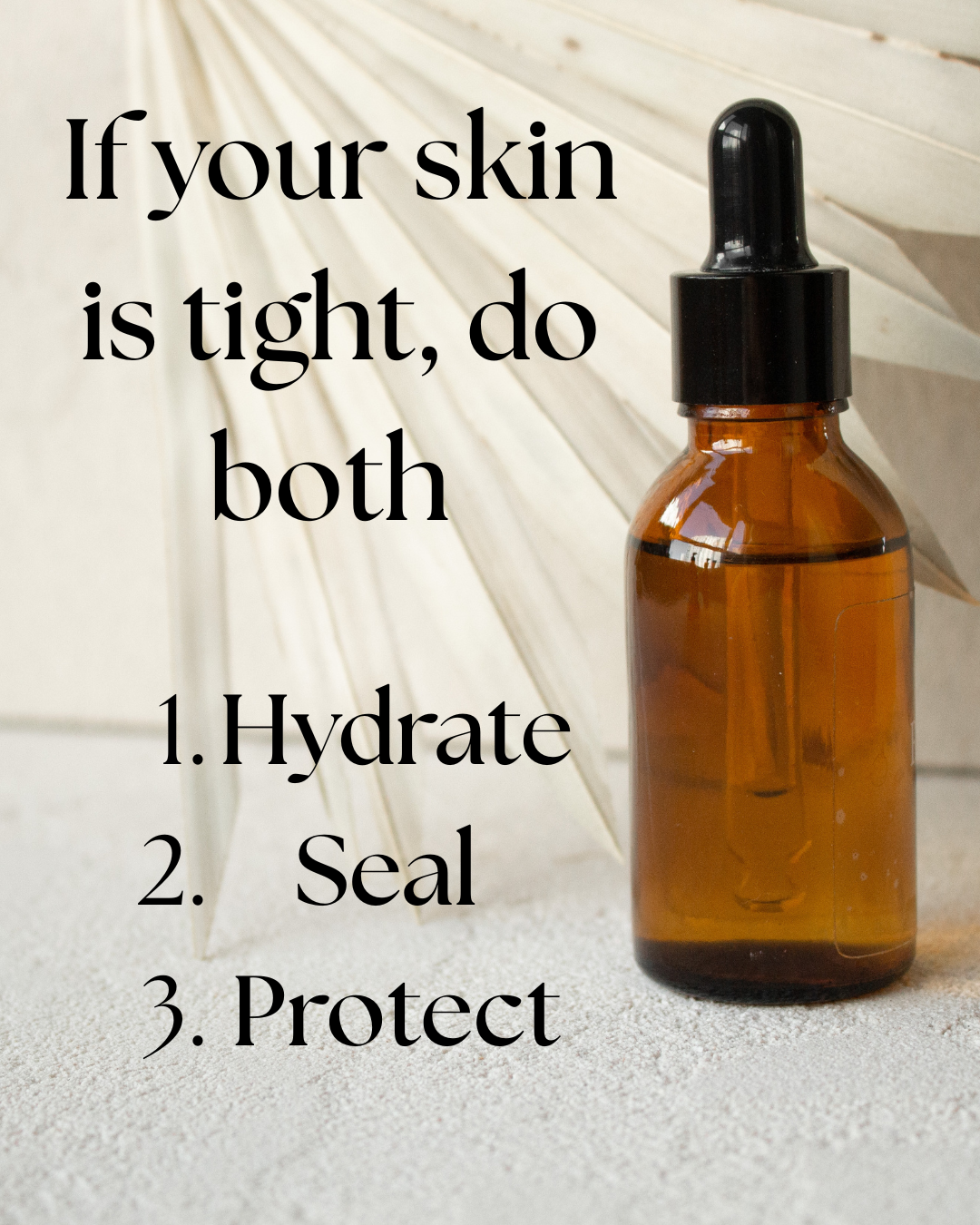
Hydration is water in the skin. Moisture is the skin’s ability to keep that water.
When one is missing, skin feels uncomfortable. When both are supported, skin feels calm, resilient, and balanced.
Understanding this difference turns skincare from habit into intention.
