
How to Read Skincare Labels When Your Skin Is Less Forgiving
Winter has a way of narrowing the margin for error. Products that felt fine a few months ago suddenly cause dryness, stinging, or low-grade irritation. When that happens, ingredient labels stop being abstract and start feeling personal.
Reading skincare labels in winter is not about fear or avoidance. It is about understanding which ingredients support stressed skin and which quietly make things harder.
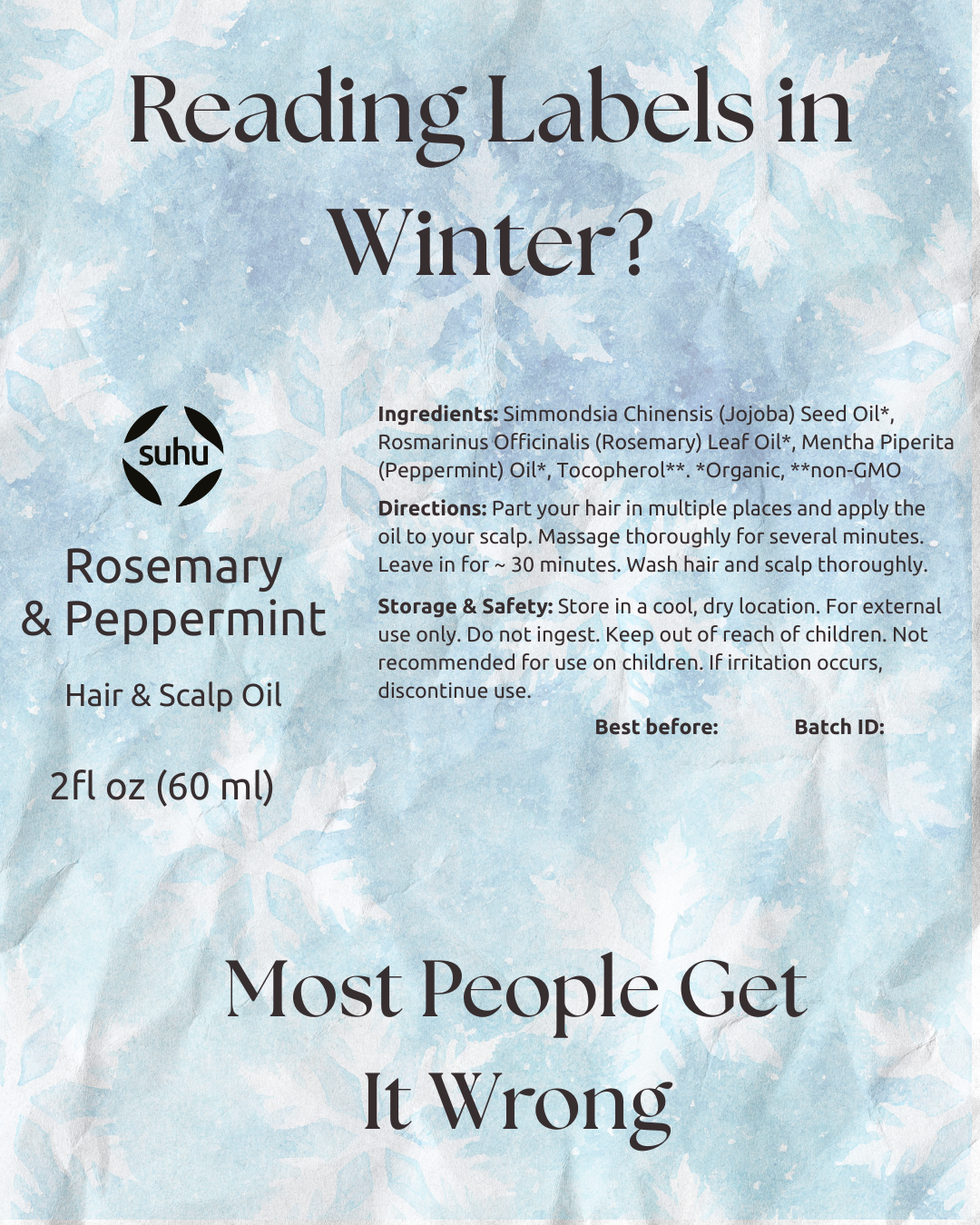
Why Winter Changes How Ingredients Behave
Cold air, low humidity, and indoor heating weaken the skin barrier and increase water loss. When the barrier is compromised, skin becomes more permeable and reactive (review).
That means ingredients that were once tolerated may now penetrate more deeply or disrupt barrier recovery. Winter skin does not just need different products. It needs different priorities.
Labels matter more because skin tolerance is lower.

What to Look for First
When reading a winter skincare label, it helps to start by asking a simple question. Does this product support the skin barrier or challenge it?
Barrier-Supporting Ingredients
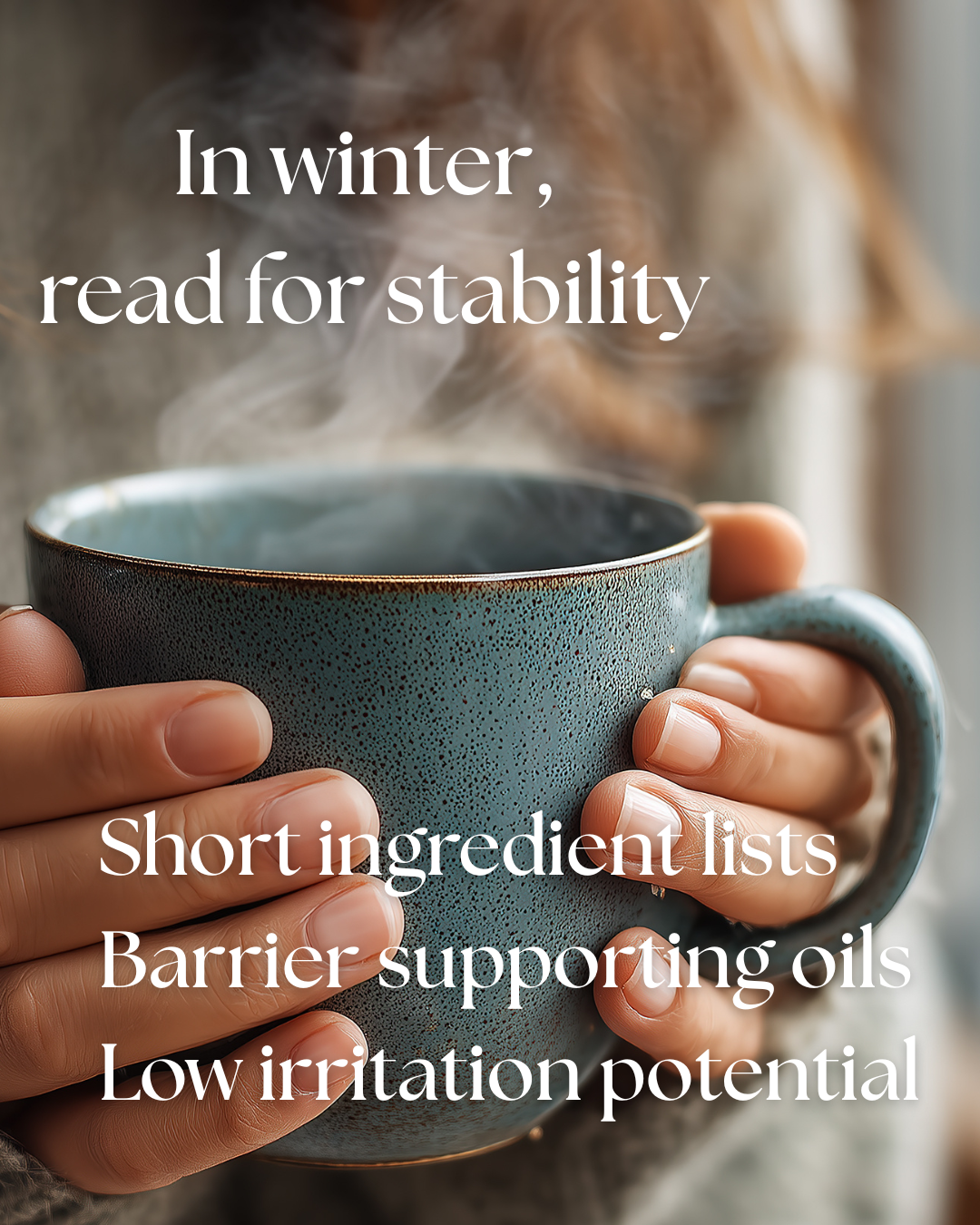
Ingredients that help reinforce or mimic the skin’s natural lipids tend to be better tolerated in winter.
These include:
Ceramides, cholesterol, and fatty acids
Plant oils rich in essential fatty acids
Waxes and emollients that slow water loss
Research shows that replenishing barrier lipids improves hydration, reduces irritation, and supports recovery (review).
These ingredients do not create dramatic effects. They create stability.
Ingredients That Deserve a Second Look in Winter
Some ingredients are not inherently bad, but they can be less forgiving when skin is already stressed.
Strong Surfactants
Cleansers with harsh surfactants can strip protective lipids and worsen dryness (review). In winter, even frequent gentle cleansing can add up.
Exfoliating Acids and Retinoids
Actives that increase cell turnover can be helpful, but they also increase sensitivity and transepidermal water loss when overused (review). Winter is rarely the best time to push intensity.
Alcohols Used for Sensory Effect
Some alcohols are used to create a lightweight feel or quick absorption. In dry conditions, they can increase evaporation and discomfort, especially on compromised skin (review).
The issue is not the presence of these ingredients. It is their context and concentration.
Why “Hydrating” Claims Can Be Misleading
Many winter products advertise hydration. Hydration refers to water content, not moisture retention.
Humectants draw water into the skin, but without adequate barrier support, that water escapes quickly. In dry air, humectants can even increase dehydration if they are not balanced with lipids (source).
A winter-friendly label usually pairs humectants with emollients and occlusives. Balance matters more than buzzwords.
Fragrance and Sensory Ingredients
Fragrance is one of the most individual aspects of skincare tolerance. Some people tolerate it well. Others do not.
In winter, when the barrier is weaker, sensitivity to fragrance can increase (study). This does not mean fragrance must be avoided entirely, but it does mean labels deserve closer attention.
Essential oils, synthetic fragrance blends, and aromatic extracts should be used thoughtfully and at appropriate levels. Transparency matters more than whether an ingredient is natural or synthetic.

How to Read Labels Seasonally
Reading labels is not about absolutes. It is about timing.
An ingredient that works well in summer may be too much in winter. A formula that feels boring may suddenly feel like relief.
Seasonal label reading means:
Prioritizing barrier support over stimulation
Reducing exposure to potential irritants
Accepting that gentler products often work better in harsh conditions
This approach reduces trial and error and builds confidence in decision-making.
Bottom Line
Winter skin is less forgiving, and labels matter more because of it.
Reading skincare labels through a seasonal lens helps you choose products that support recovery rather than quietly undermining it. The goal is not perfection. It is compatibility.
When skin feels calmer, it is usually because the ingredients are working with the environment, not against it.
