Thinning hair and concerns about scalp health are common, and most people eventually come across minoxidil as the ‘go-to’ solution. While minoxidil can be effective, it can also cause dryness, irritation, and a sense that you are locked into a lifelong clinical treatment. Healthy hair growth depends on a well-nourished scalp, and that means good circulation. Whether through massage, nourishing oils, or targeted treatments, stimulating blood flow helps deliver oxygen and nutrients to the follicles where hair begins.
Rosemary and peppermint oils are emerging as gentler, plant-based ways to encourage this process. They are not a replacement for minoxidil, but science suggests they can help support healthier, thicker-looking hair when used consistently.
The Science on Rosemary
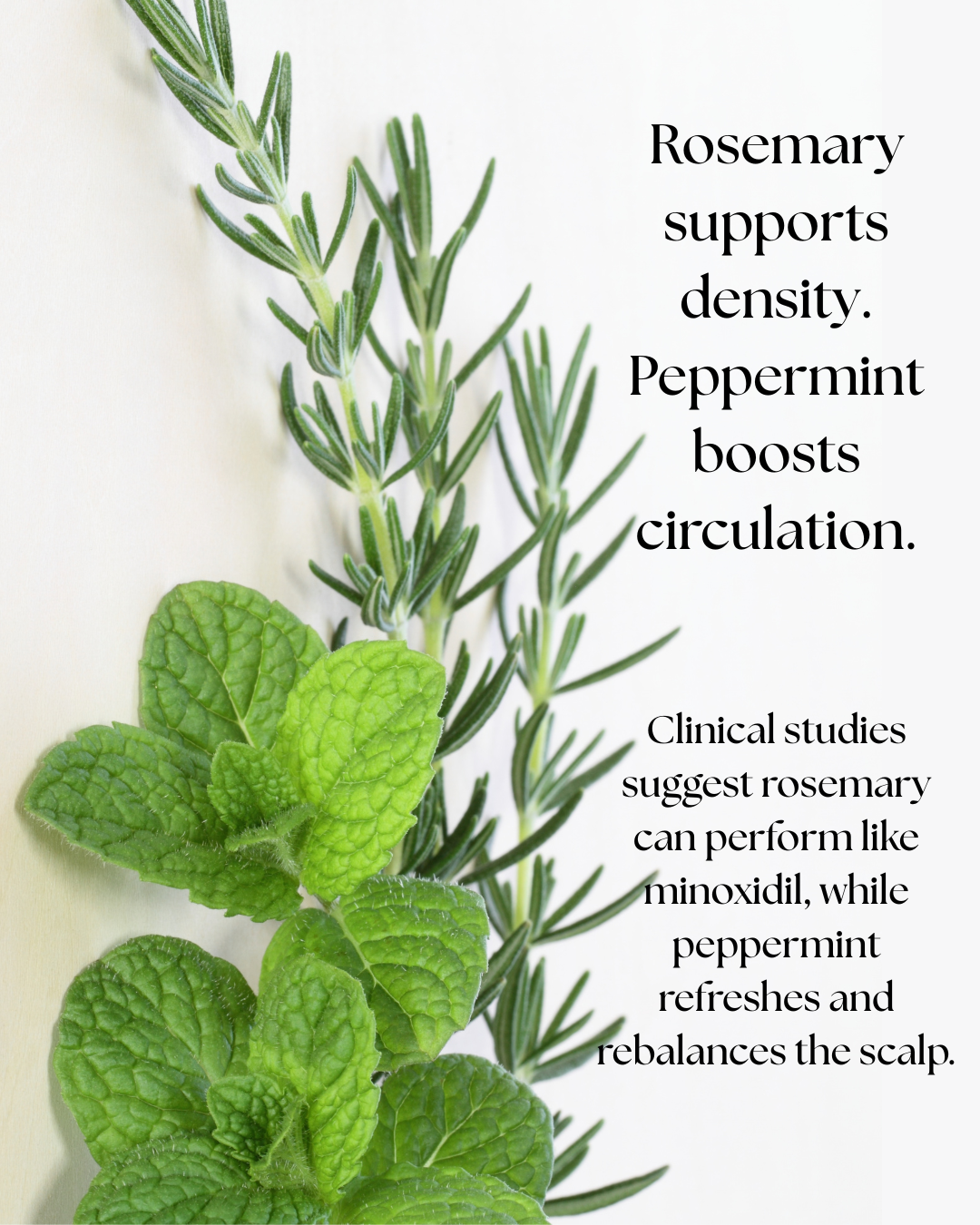
Rosemary essential oil has been studied as a natural option for hair density. Rosemary isn’t a pharmaceutical, but clinical data suggests it can support hair density in a way similar to minoxidil, with fewer side effects.
In a six-month randomized clinical trial of 100 men with androgenetic alopecia, rosemary oil performed comparably to minoxidil. While both groups showed a significant increase in hair count, the rosemary group reported less scalp itching. (study)
Preclinical research shows rosemary extract promotes hair growth by improving circulation around follicles and upregulating growth factors. (study)
The Science on Peppermint
Peppermint oil is well known for its cooling effects, but this oil is so much more than just refreshing. Human studies on peppermint oil for hair growth are limited, but evidence shows that its circulation-boosting and scalp-balancing properties make it a supportive natural ingredient for scalp health.
Menthol, the main active compound, stimulates receptors in the skin linked to circulation. Improved circulation supports nutrient delivery to the hair follicles. (study)
Peppermint shows antimicrobial and soothing properties, which may help maintain a clean, comfortable scalp environment. (study)
In a mouse study, peppermint oil outperformed minoxidil by significantly increasing hair growth and scalp health. (study)
The Supporting Cast
Jojoba Oil: A lightweight carrier oil that mimics natural scalp oils and balances hydration (review)
Vitamin E: An antioxidant shown to reduce oxidative stress, which is linked to hair follicle aging (study)
Sea Fennel: Contains marine antioxidants and phytonutrients; research highlights its role in skin renewal and potential support for scalp vitality. (study)
How Does It Compare to Minoxidil?
Efficacy: Minoxidil has decades of clinical research and is FDA-approved for hair regrowth. Rosemary oil has one human trial suggesting comparable benefits at 6 months. Peppermint has not yet been studied in humans.
Side Effects: Minoxidil often causes dryness, itching, or irritation. Rosemary showed fewer side effects in the clinical trial, and peppermint is generally well-tolerated when diluted properly.
Experience: Minoxidil is a daily medicinal treatment that must be administered continuously to avoid hair loss. Rosemary and peppermint are part of a sensory ritual, with natural aromas, scalp massage, and nourishing oils that contribute to overall scalp health.
The Ritual with SuHu
Suhu’s Rosemary Peppermint Hair & Scalp Oil brings together science-informed botanicals and everyday simplicity. It is not a replacement for medical treatment, but it is a clean, gentle ritual that supports scalp health and hair confidence.
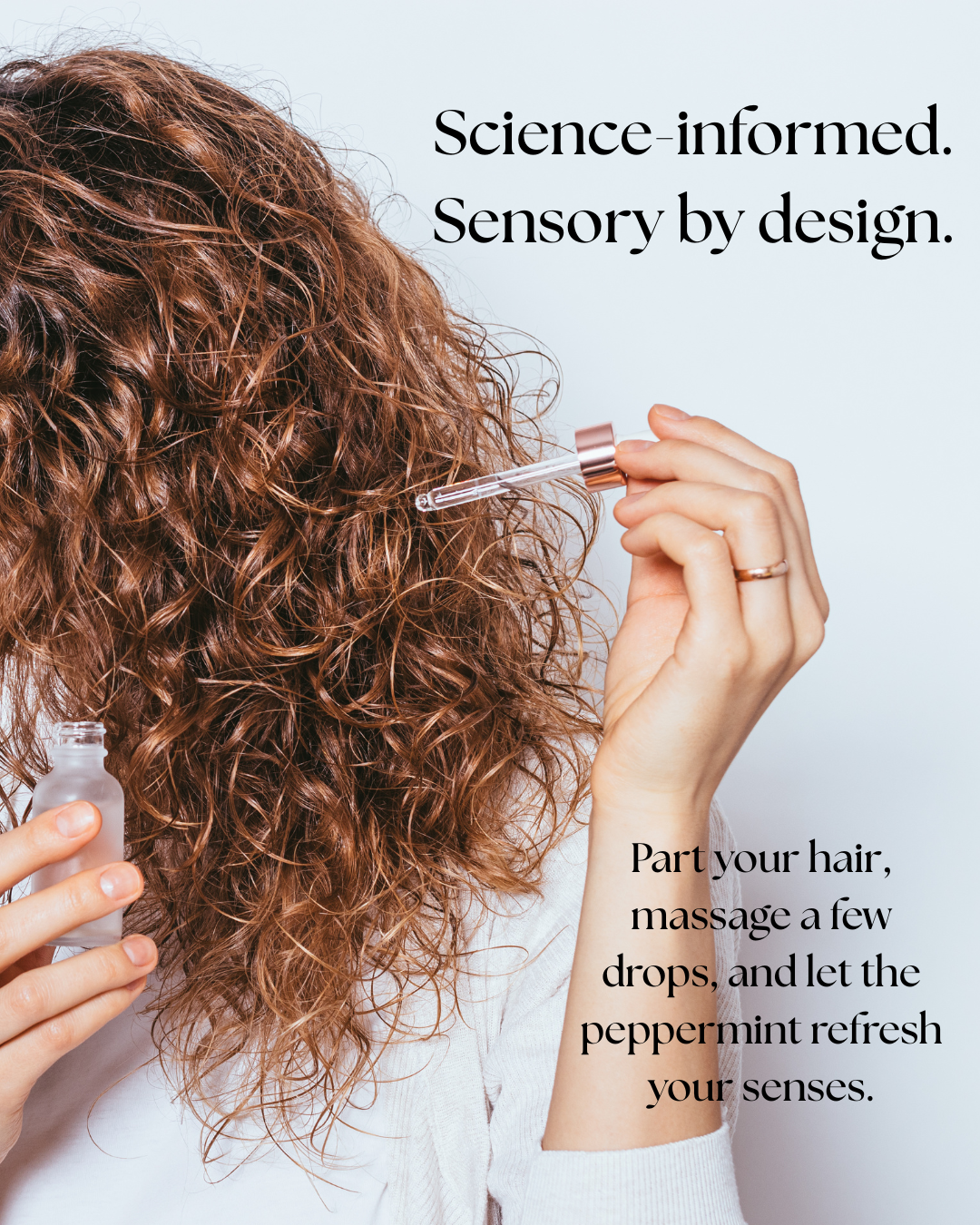
Part your hair, massage a few drops into your scalp, and let the peppermint refresh your senses. Leave it in for 30 minutes before rinsing. Over time, this ritual can help create the conditions for thicker, healthier-looking hair.