
“Clean beauty” has become one of the most overused and misunderstood terms in skincare. It appears on product labels, influencer captions, and store displays, yet there’s no universal definition.
At Suhu, we believe that clarity is the antidote to confusion. This article unpacks what “clean beauty” actually means, what it doesn’t, and how to make informed decisions that serve both your skin and your values.
What “Clean Beauty” Originally Meant
The phrase clean beauty emerged in the late 2000s as a consumer response to growing concerns about certain cosmetic ingredients, namely parabens, phthalates, sulfates, and synthetic fragrances (source). The intent was simple: create products that are safer for people and the planet.
But unlike terms such as “organic” or “non-comedogenic”, clean has no regulatory definition. The FDA doesn’t certify or monitor what qualifies as clean beauty (source). As a result, brands and retailers define it in their own ways. Some focus on sustainability, others on ingredient sourcing, and others on perceived ‘toxicity’.
The Problem With “Free-From” Lists
Many “clean” brands build their identity around what they don’t include: “no parabens”, “no silicones”, “no chemicals”. But this kind of language can be misleading for two reasons:
Everything is made of chemicals. Water, vitamin C, and botanical extracts are all chemical substances. “Chemical-free” skincare doesn’t exist.
Absence doesn’t equal safety. Some banned-incredient lists remove substances that have been proven safe at low concentrations (study). Others include ingredients that are necessary for stability and microbial safety.
In reality, safety depends on formulation and dosage, not simply whether an ingredient sounds “natural”
Natural vs. Synthetic: The False Divide
One of the biggest myths in skincare is that natural equals safe and synthetic equals harmful. This is not supported by science. Many plant extracts can cause irritation or allergic reactions, while numerous lab-created compounds are both stable and gentle (study).
For example:
Synthetic ceramides mimic natural skin lipids and are well-tolerated
Naturally derived essential oils can be highly sensitizing if used incorrectly.
Sustainability and Ethics: Where Clean Beauty Finds Its Purpose
While ingredient lists can be confusing, ethical sourcing and sustainability give clean beauty real meaning. That includes:
Responsibly sourced raw materials
Cruelty-free testing
Transparent supply chains
Recyclable or reduced packaging
These are measurable standards that benefit both the consumer and the environment (study).
Suhu’s philosophy aligns here: science should improve skincare performance and reduce harm. Our ingredients are chosen for efficacy, safety, and sustainability – never one at the expense of another.
How to Read “Clean” Claims Critically
If you’re shopping for skincare and want to make thoughtful choices, focus on these cues instead of buzzwords:
Transparency over marketing. Look for brands that publish ingredient rationales, not just “no” lists.
Safety over fear. Trust products with evidence-based claims and safety testing.
Performance over perfection. A product that’s gentle, effective, and sustainably made is more “clean” than one that merely avoids certain ingredients
Suhu’s Take
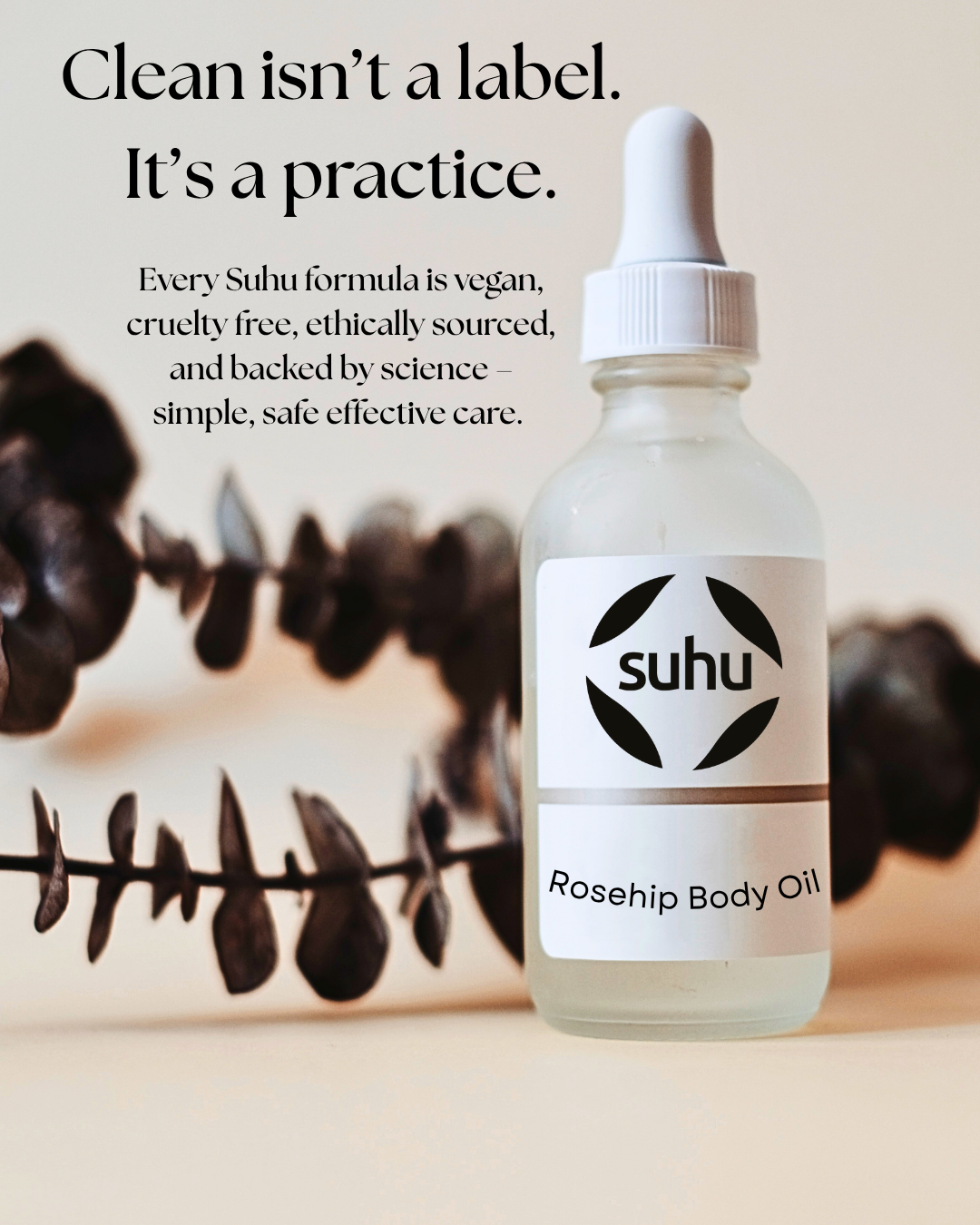
To us, “clean” isn’t a marketing label. It’s a practice.
Every formula we create is:
Vegan and cruelty-free
Ethically sourced from trusted partners
Science-backed for safety and performance
We avoid fear-based claims and focus instead on education and evidence. Because skincare should be simple, ethical, and effective – not a guessing game.
