Aromatherapy has been used for centuries to calm the mind, improve mood, and support overall well-being. But what does science actually say about it? Far from being “just a nice smell”, certain essential oils have measurable physiological and psychological effects, influencing the nervous system, mood regulation, and even stress recovery.
At Suhu, we use scent intentionally. Our blends of scents like rosemary, peppermint, citrus and vanilla are crafted not only for their natural aroma but also for their ability to enhance your sensory experience while supporting balance and calm.
How Aromatherapy Works
When you inhale essential oils, their aromatic compounds travel through the olfactory system, the part of the brain linked to emotion, memory and hormonal response (review). This is why scent can instantly lift your mood, trigger nostalgia, or create a sense of relaxation.
Research shows that essential oils can influence physiological markers such as heart rate, blood pressure, and cortisol levels (review). In other words, what you smell can directly impact how your body feels.
Evidence-Based Benefits of Aromatherapy
Stress Reduction and Relaxation
Lavendar, bergamot, and citrus oils are some of the most studied for reducing anxiety and stress. In a controlled trial, participants who inhaled bergamot essential oil for just 15 minutes showed measurable reductions in heart rate and blood pressure (study). Another meta-analysis found that aromatherapy with lavender consistently improved anxiety symptoms and sleep quality (review).
What it means: Certain scents can activate the parasympathetic nervous system (your body’s ‘rest and restore’ mode) helping you unwind and recover from stress.
Improved Mood and Cognitive Function
Aromatherapy can also enhance focus and alertness. Peppermint, rosemary, and citrus oils have been shown to stimulate brain activity and improve performance on memory and attention tasks (study). In one study, students who inhaled rosemary essential oil before an exam showed improved memory retention and alertness compared to a control group (study).
What it means: Invigorating scents like rosemary and peppermint may help maintain focus and mental clarity, making them a great part of any energizing self-care ritual.
Support for Sleep and Emotional Balance
The calming properties of essential oils extend into the nighttime. A systemic review found that inhaling lavender oil before bed improved sleep quality in adults and reduced insomnia symptoms (review). Another trial observed citrus and vanilla-based aromas helped balance emotional states and reduced stress-induced fatigue (study).
What it means: Integrating calming scents into your evening care routine can promote relaxation and emotional well-being, helping you transition from stimulation to rest.
Why We Use Aromatherapy in Skincare
At Suhu, aromatherapy is not an afterthought. Each essential oil we use is chosen for both function and feeling.
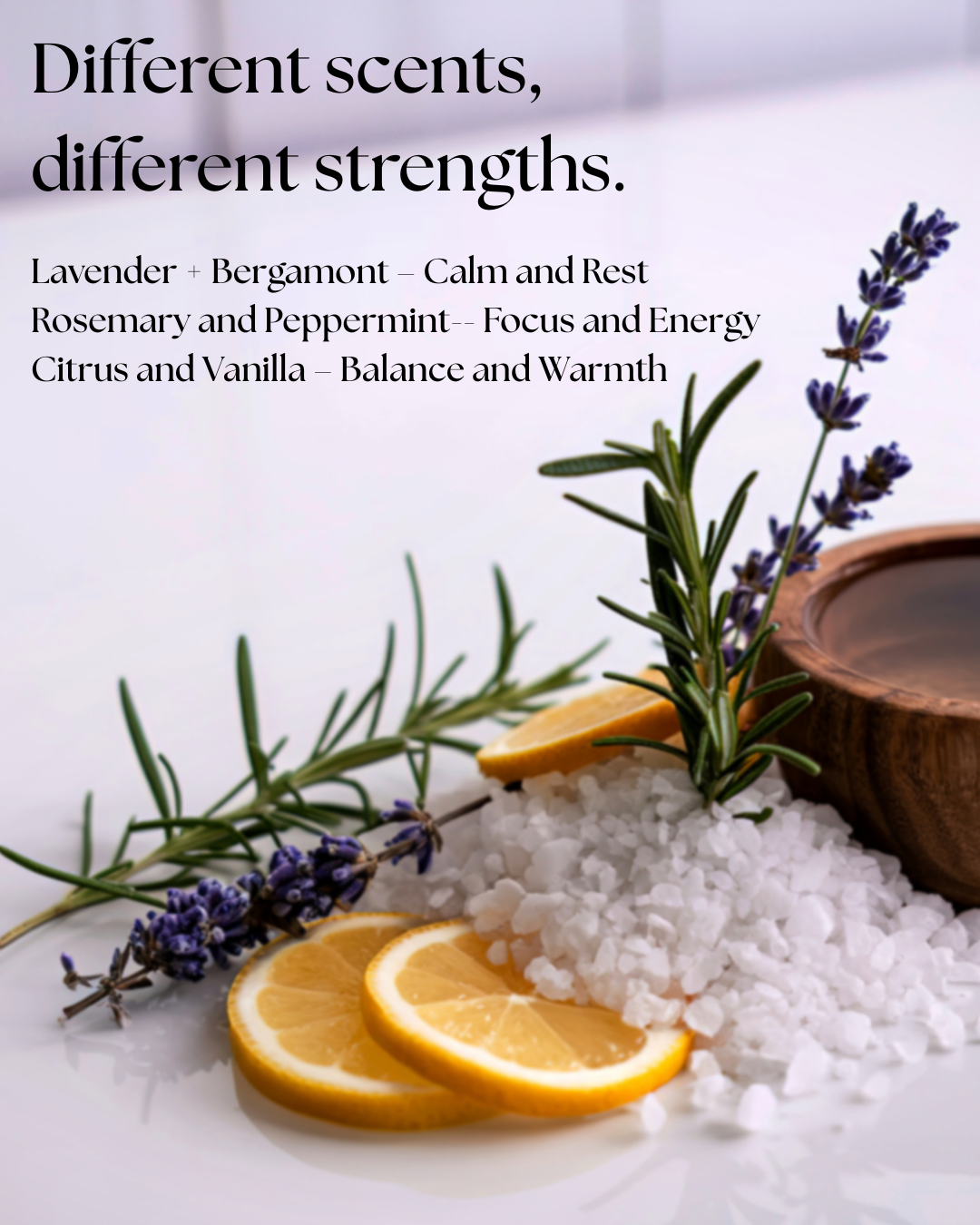
Rosemary and Peppermint energize the scalp, improve circulation, and create a refreshing ritual.
Citrus and Vanilla uplift the mood while bringing comfort and warmth to your daily skincare experience.
Lavender and Bergamot calm the senses and reduce tension, helping you unwind while nurturing your skin.
Bottom Line
Aromatherapy bridges the gap between sensory pleasure and measurable science. By influencing mood, stress, and cognitive function, it transforms simple skincare into a form of self-care.
Science continues to confirm what many cultures have known for centuries: when used thoughtfully, scent can support the body and mind in meaningful ways.
At Suhu, we see aromatherapy as an act of intentional care, rooted in research, guided by nature, and designed to help you feel good in your skin.