The Winter Habits That Quietly Undermine Your Skin
When skin starts acting up in winter, most of us look to our products for answers. We switch cleansers, add richer moisturizers, or blame an ingredient that never caused problems before.
But some of the biggest drivers of winter irritation have nothing to do with what you put on your skin. They are the habits we fall into when it gets cold.
Stress, heat, and overcleansing rarely show up on ingredient labels, but they have a real and compounding effect on skin health.
Why Winter Brings Hidden Stress to the Skin
Winter changes how we move through the world. Days are shorter. Schedules compress. Bodies tense up against the cold.
Psychological stress does not stay in the mind. It affects the skin through hormonal pathways, particularly cortisol. Elevated cortisol has been shown to impair barrier recovery and increase inflammation in the skin (study).
This is why skin can feel more reactive during periods of stress, even when routines stay the same. The skin is operating in a heightened defensive state.
Heat Feels Comforting, but Skin Pays the Price
Hot showers, long baths, and standing close to heaters feel good in winter. For skin, they are less forgiving.
Heat increases blood flow to the surface of the skin, which can feel soothing at first. But it also disrupts lipid organization in the outer layer and increases transepidermal water loss (review).
Repeated exposure to hot water strips away protective oils faster than the skin can replace them. Over time, this leads to dryness, tightness, and sensitivity, even when moisturizing regularly (study).
The problem is not the occasional hot shower. It is the daily accumulation.
Overcleansing Is Often Unintentional
Most people who overcleanse are not trying to be harsh with their skin.
In winter, cleansing habits often intensify without notice. Hot showers encourage more frequent washing. Dryness leads people to cleanse morning and night. Foaming or clarifying cleansers feel satisfying when skin feels off.
Research shows that repeated cleansing with surfactants removes intercellular lipids that are essential to barrier function (review). Once those lipids are depleted, skin becomes more permeable and more reactive.
This is why skin can feel tight immediately after cleansing, even before any products are applied.
Why Products Get Blamed for Behavioral Damage
When skin becomes irritated, the most visible variable is skincare. But behavior often changes before products do.
Stress rises. Showers get hotter. Cleansing becomes more frequent. The skin barrier weakens quietly, and suddenly products that once felt gentle begin to sting.
This is not because the products changed. It is because the skin’s tolerance has.
Understanding this distinction can prevent unnecessary product cycling and frustration.

What Actually Helps in Winter
Addressing winter irritation starts with reducing daily stressors on the skin.
That can mean:
Lowering water temperature when bathing
Cleansing less frequently or using gentler cleansers
Shortening shower time
Supporting the barrier with lipids after washing
Recognizing stress as a skin factor, not just a lifestyle one
These adjustments reduce cumulative damage and give the skin space to recover (review).
A Different Way to Think About Winter Skin
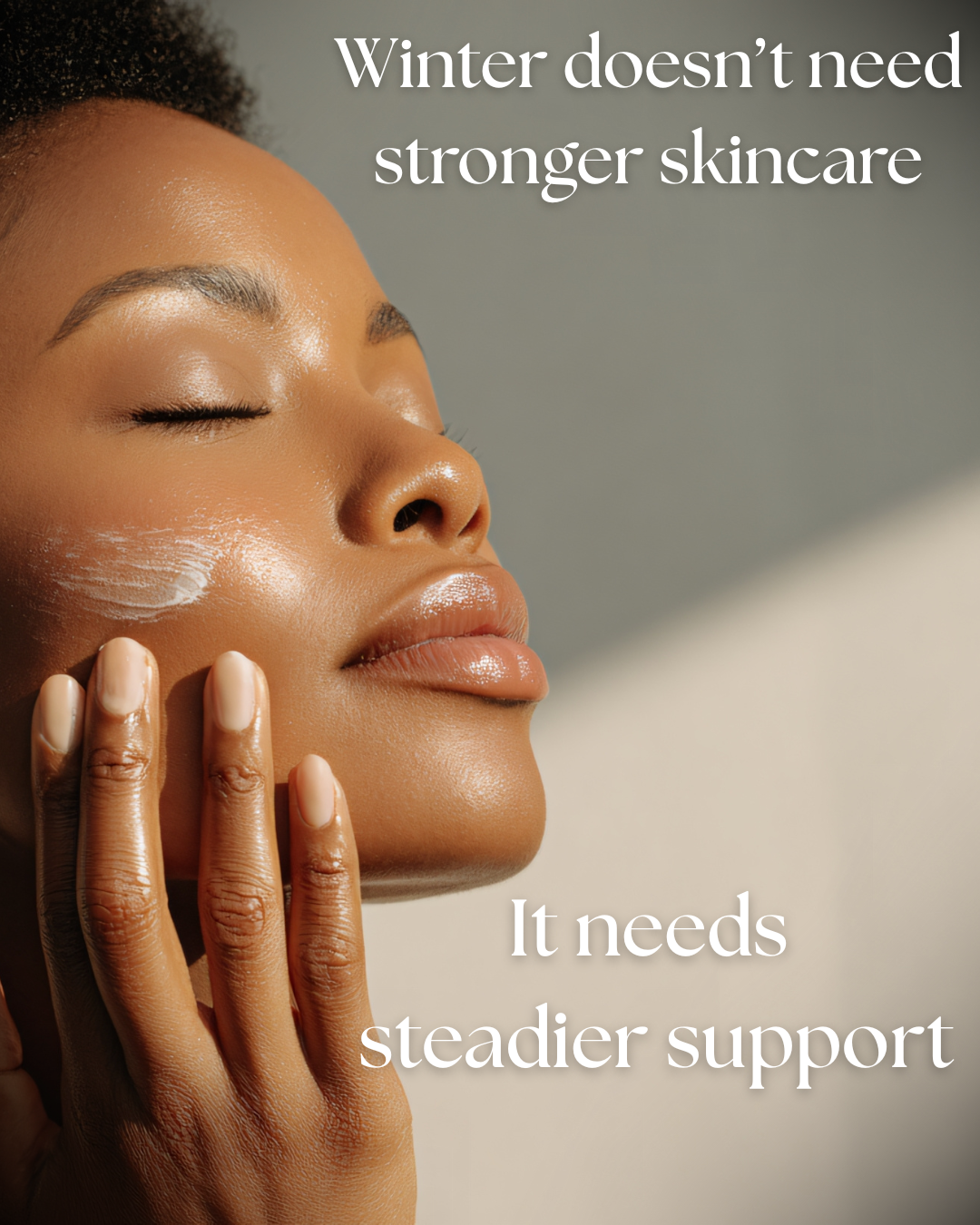
Winter skin does not need to be managed aggressively. It needs to be protected.
When irritation shows up, it is often a signal that the skin is overwhelmed, not under-treated. Responding with restraint rather than escalation allows the skin to return to balance more reliably.
Sometimes the most effective skincare change is not adding a product. It is removing pressure.
Bottom Line
Stress, heat, and overcleansing quietly undermine skin health in winter. They weaken the barrier, increase water loss, and lower tolerance across the board.
When these factors are addressed, skin often improves without changing a single product.
Winter skin care works best when it considers behavior as much as formulation.