What Changes: Before an Ingredient Touches Your Skin
You see the ingredient list, but what happened before that formula reached your hands? Most of a product’s behavior is shaped long before it is applied to skin. From sourcing to storage, small changes influence how that formula performs.
What affects skincare before use includes how ingredients are sourced, processed, stored, and packaged. This happens because each step influences ingredient stability, purity, and structure. As a result, two products with similar ingredients can behave differently on skin.

Sourcing Shapes Starting Quality
Ingredient sourcing refers to where and how a raw material is obtained.
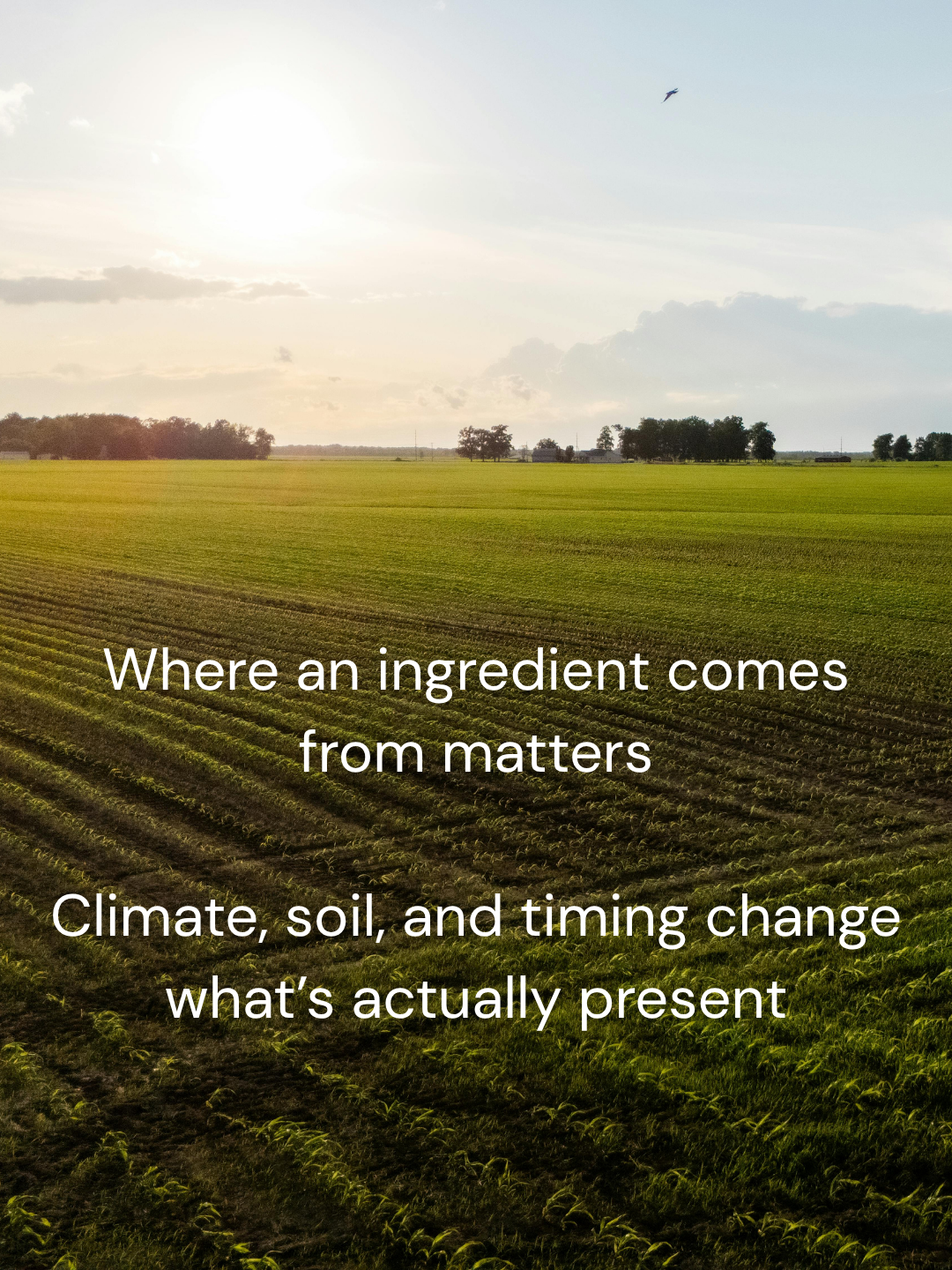
Plant-based ingredients vary depending on climate, soil composition, and harvest timing. These factors influence the concentration of active compounds present in the material (paper).
This means two sources of the same ingredient can begin with different chemical profiles.
As a result, variability is introduced before formulation even begins.
Processing Changes the Ingredient Itself
Once sourced, ingredients are processed into usable forms.
Extraction methods, temperature, and solvents all influence what compounds remain.
Some methods preserve delicate molecules, while others prioritize yield or stability.
This happens because processing conditions can alter molecular structure and remove or concentrate specific compounds (review).
In practice, the ingredient listed on a label is not identical to its raw form.
It has already been shaped by processing decisions.

Time and Storage Affect Stability
After processing, ingredients and finished products are stored before use.
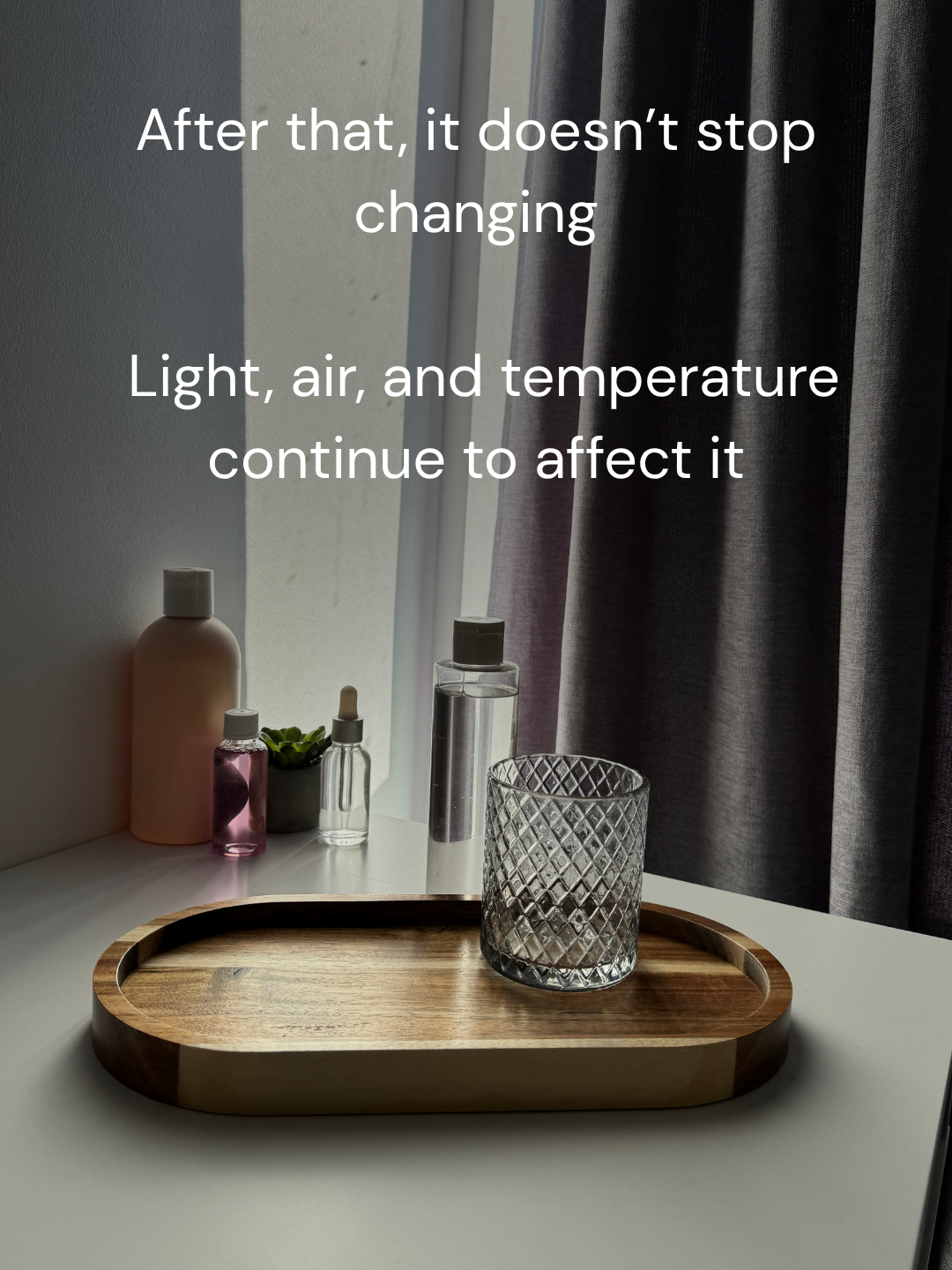
Exposure to oxygen, light, and temperature fluctuations can begin to change ingredients gradually.
These changes often occur before any visible signs appear.
This happens because many compounds undergo oxidation or photodegradation when exposed to environmental stressors (review).
As a result, stability is not fixed at production. It continues to evolve over time.
Packaging Becomes Part of the Formula
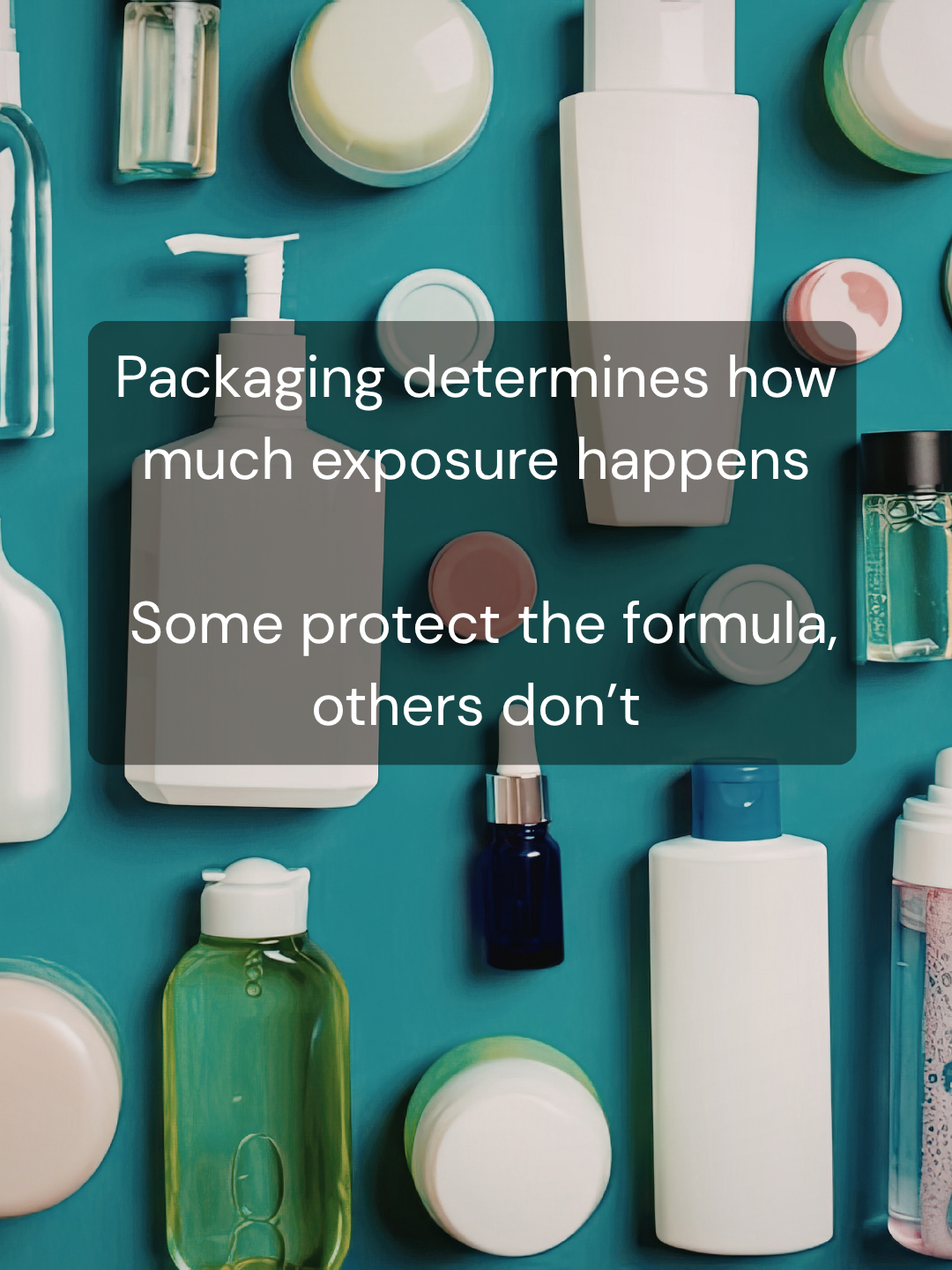
Packaging controls how much exposure a formula has to external conditions.
Air, light, and contamination all influence degradation pathways.
Some packaging limits these exposures more effectively than others.
This happens because materials differ in oxygen permeability and light-blocking capacity (review).
In practice, packaging is not separate from the product.
It directly influences how long a formulation remains stable.
What This Looks Like in Practice
Two products can share similar ingredient lists but behave differently due to:
differences in sourcing
variations in processing
exposure during storage
level of protection from packaging
As a result, performance differences often begin long before application.
Why This Matters for Skin
By the time a product reaches your skin, it has already undergone multiple stages of change.
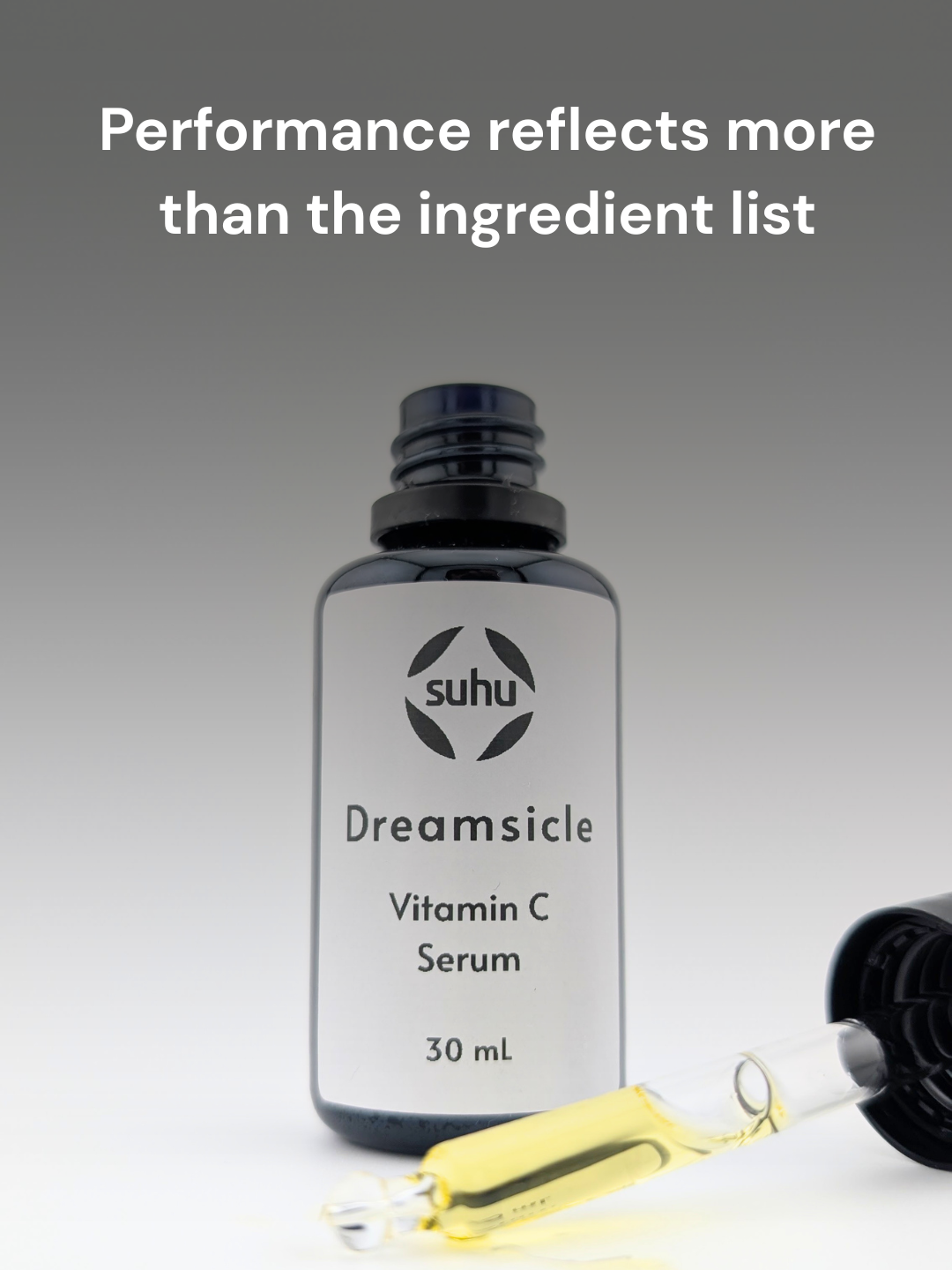
These stages influence how stable, active, and balanced the formula remains. As a result, performance reflects the entire lifecycle of the product, not just its ingredients.
Suhu’s Take
This is part of how we approach formulation.
We consider how ingredients are sourced, handled, and protected so they remain stable and consistent by the time they reach skin.