What Changes in Humidity
Humidity describes the amount of water vapor present in the air. It is one of the most important environmental factors influencing how skin behaves. When humidity rises or falls, the balance of water inside the outer layer of the skin shifts as well. The visible effects can be subtle at first. Skin may feel tighter, oilier, more reactive, or more comfortable depending on the surrounding conditions. These changes are not random. They reflect how the skin barrier interacts with moisture in the environment. Understanding humidity helps explain why the same routine can feel perfect in one season and ineffective in another.
What Humidity Does to the Skin Barrier
The outermost layer of the skin, called the stratum corneum, functions as a protective barrier. It is built from flattened skin cells surrounded by lipids such as ceramides, cholesterol, and fatty acids. Together, these components help regulate water movement between the body and the surrounding air (review).

One of the key measurements used to describe barrier performance is transepidermal water loss, often shortened to TEWL. This refers to the amount of water that escapes from the skin over time.

Humidity influences this process directly. When the surrounding air is very dry, the gradient between the skin and the environment increases. Water evaporates more quickly, and TEWL rises. When humidity is higher, evaporation slows and the skin retains moisture more easily.

In simple terms, dry air pulls water out of the skin faster than humid air does.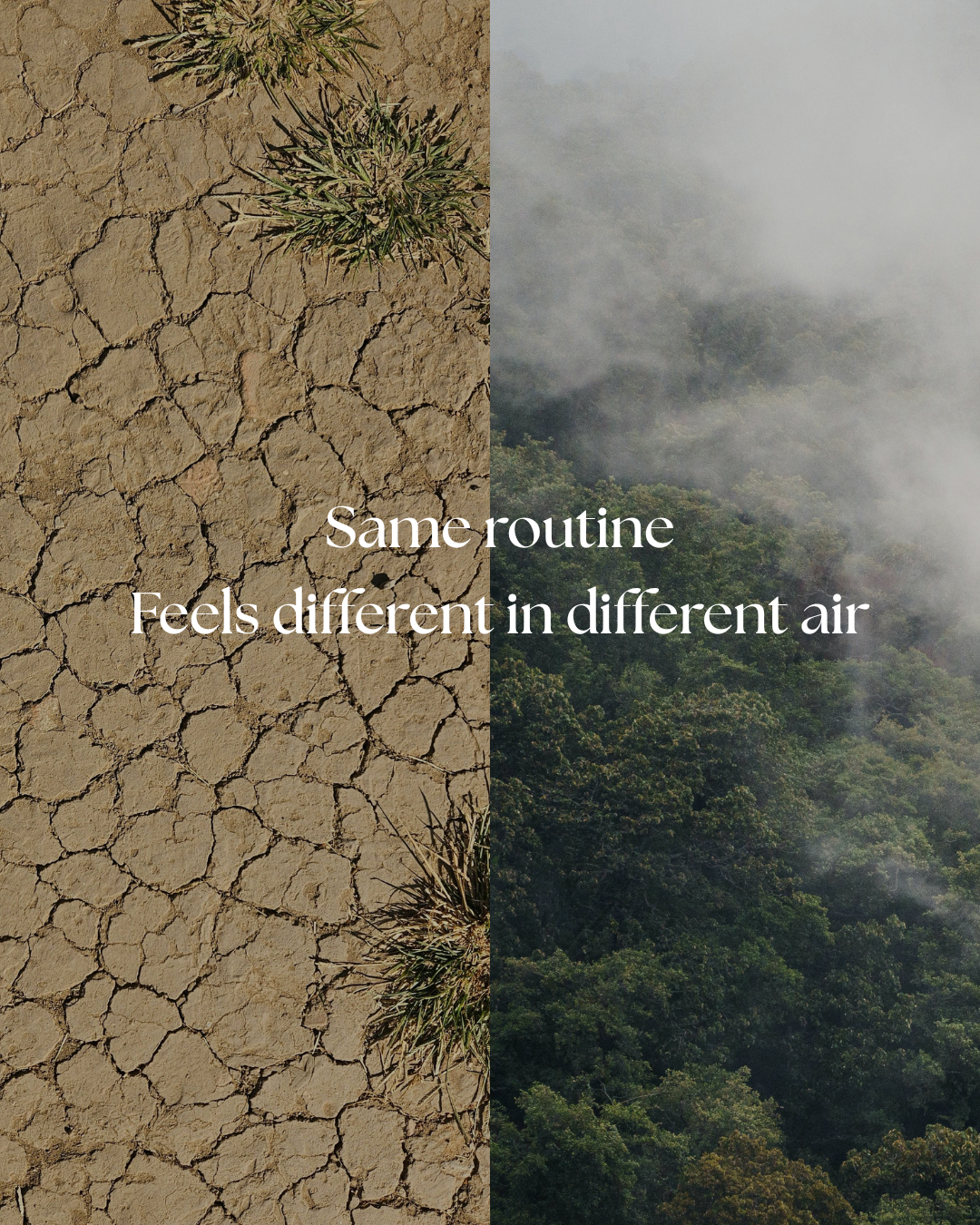
Why Skin Feels Different in Dry Air
Low humidity environments are common in winter and in air-conditioned or heated indoor spaces. In these conditions, water leaves the stratum corneum more quickly than it can be replaced.

As the outer layer loses water, several things happen.

Skin can feel tight because the corneocytes lose flexibility. Fine lines may appear more pronounced. Sensitivity often increases because the lipid matrix becomes less effective at buffering irritants.

Research on skin barrier function shows that when hydration drops, the structural organization of the barrier becomes less efficient, allowing more water to escape and increasing the likelihood of irritation (review).

This is why dryness and irritation often appear together.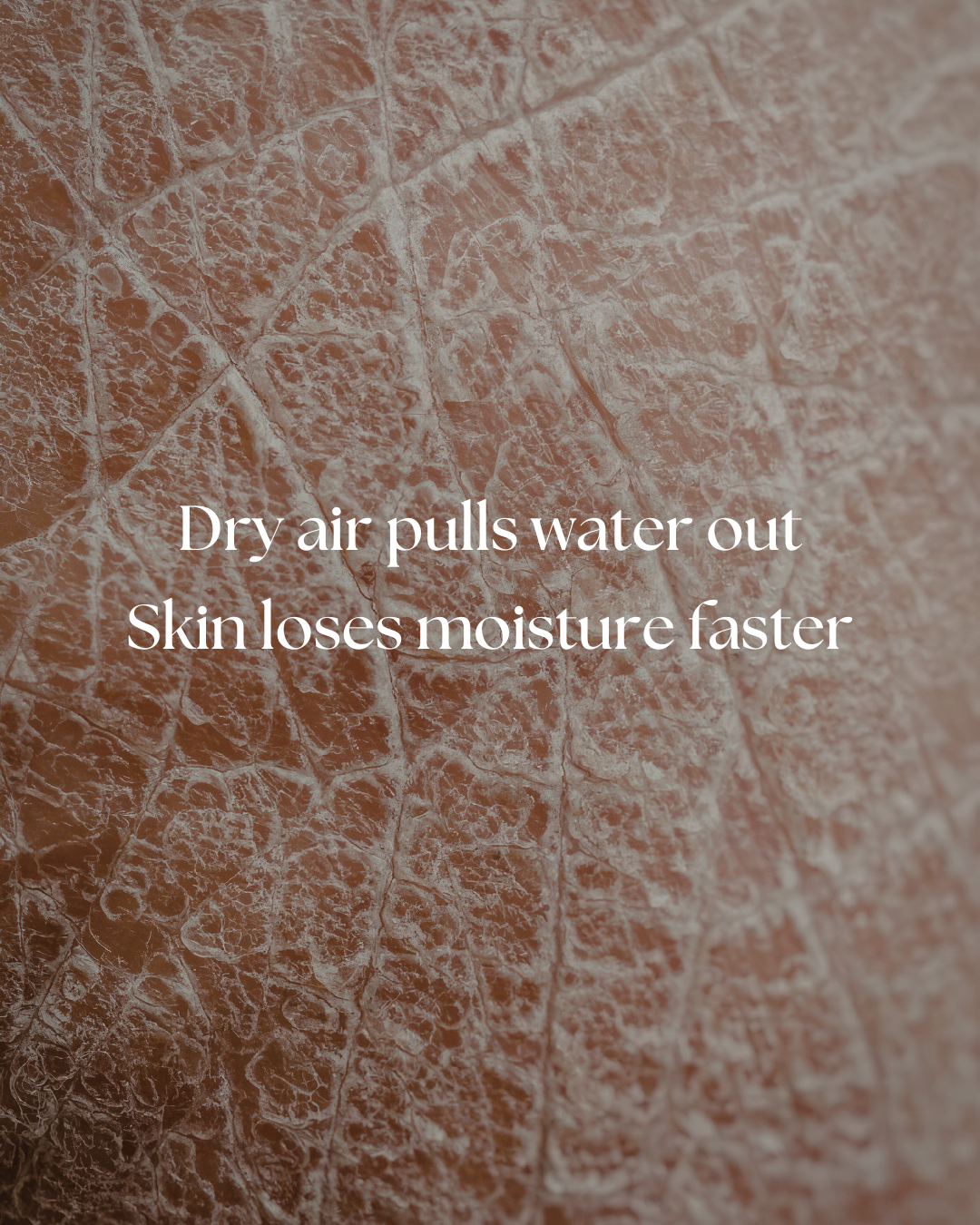
Why High Humidity Feels Different
High humidity produces a different set of effects.

When the surrounding air contains more water vapor, evaporation from the skin slows. The stratum corneum stays more hydrated, which generally improves flexibility and comfort.

However, very humid environments can also increase surface oiliness and sweat production. Sebum spreads more easily across hydrated skin, and occlusion from sweat can make pores feel congested.

The skin barrier is usually under less dehydration stress in humid climates, but other concerns such as breakouts or microbial growth can become more noticeable.

Humidity does not automatically mean better or worse skin. It simply changes the pressures acting on the barrier.
Why Products Behave Differently in Different Climates
Humidity also affects how skincare ingredients perform.

Humectants such as glycerin attract water and help bind it within the outer layer of the skin. Their performance depends partly on how much moisture is available in the surrounding environment. In moderate or high humidity, humectants can draw water from the air as well as from deeper layers of the skin (review).

In very dry air, humectants still hydrate the skin, but they rely more heavily on water already present in the epidermis.

Occlusive and lipid-rich ingredients behave differently. Oils and barrier-supportive lipids help slow water loss by reinforcing the lipid matrix. Their function becomes especially noticeable when humidity is low and the skin needs additional protection against evaporation.

The same product can therefore feel lighter, richer, or more protective depending on the environment in which it is used.
What This Means for Your Routine
Humidity is one reason skincare routines rarely work the same way all year.

When the air is dry, the skin often benefits from strategies that slow water loss and reinforce the barrier. Lipid-rich moisturizers and oils can help reduce evaporation and maintain flexibility in the outer layer.

When humidity rises, the skin may require less barrier reinforcement but still benefit from gentle hydration and support for the lipid matrix.

The goal is not to chase dramatic changes in appearance. It is to maintain a stable barrier that can adapt to environmental stress.

Humidity changes the environment around your skin. A well-supported barrier helps your skin adapt to those changes with less irritation and less guesswork.
Bottom Line
Humidity affects how quickly water leaves the skin. Dry air accelerates water loss, while humid air slows it.

When humidity drops, the skin barrier faces greater evaporation pressure. When humidity rises, hydration becomes easier to maintain but oiliness and congestion may increase.

Understanding humidity helps explain why barrier-supportive routines often matter most when the air is dry.